

About RESED
The RESED Group is a research group within the Structural Engineering and Design unit at Eindhoven University of Technology. RESED stands for Resource Efficient Structural Engineering and Design.
Students collaborate in a shared studio environment, working on individual research and design projects that contribute to a common goal:
reducing global resource demand and minimizing waste in the building industry to lower its environmental impact.
The building and construction sector is the most resource-intensive industry in the European Union, accounting for approximately 50% of all primary raw material consumption. Structural designers therefore carry a major responsibility, as their decisions strongly influence material use and, consequently, the environmental performance of the built environment.
Meeting this challenge requires a fundamental rethinking of established structural engineering and design practices. The role of the structural designer must itself be “RESED.”
This transformation calls for new ways of thinking, including:
- Innovative design approaches
- Material reduction and re-use
- The application of renewable materials
- Optimized and automated design processes
“Re-duce, Re-use, Re-new, Re-SED”
Reduce material usage

The first question we should ask is: do we really need to build something? If construction is necessary, the use of materials should be minimized. Materials must be used as efficiently as possible by finding the optimal balance between structural form and the flow of forces. In addition, developments in adaptive structures offer new opportunities to further reduce the consumption of natural resources.
Lightweight structures fully integrate engineering and architecture. When structures are required to span large distances, reach greater heights, or remain deployable or mobile, reducing self-weight becomes increasingly important. To achieve this, lightweight structures are designed to minimize bending moments and instead carry loads primarily through axial forces (tension and compression). Three-dimensional, nature-inspired forms make force flows visible while enriching architectural expression.
Adaptive Structural Systems respond to a wide range of design factors that influence building performance, including structural loads, architectural requirements, environmental conditions, and user behavior. Most, if not all, of these factors change over time. However, conventional buildings are typically not designed to adapt to evolving contexts and demands. Therefore, current research focuses on real-time adaptation of structures and building envelopes, enabling buildings to respond dynamically to changing conditions and user needs.
Re-use of materials, elements & structures
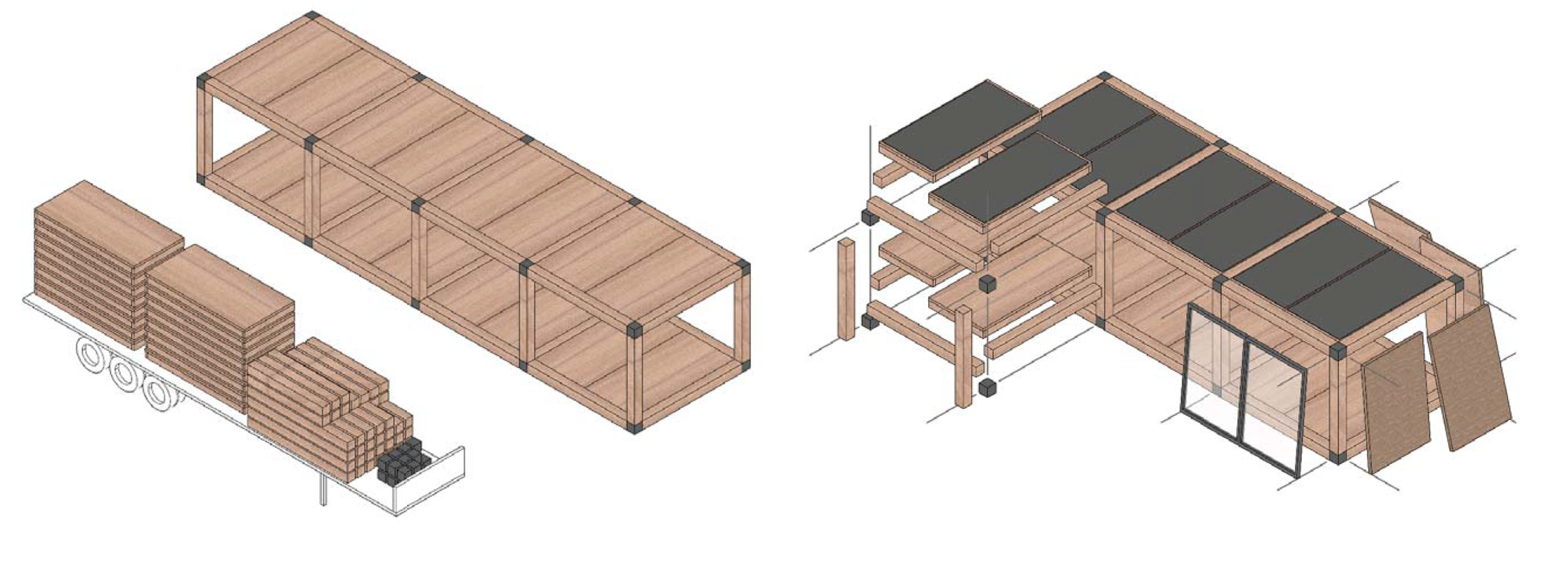
In all industrialized countries, there is a vast stock of existing buildings. While new construction will continue to be necessary, fully understanding the potential to reuse existing buildings—or their components—can significantly contribute to conserving natural resources.
Designing new buildings using reused building elements is an effective strategy to reduce material consumption, but it also introduces new challenges. Assessing the structural quality of reclaimed elements, as well as integrating them into new designs in terms of dimensions and connection details, requires a fundamentally different design approach. Rather than finalizing a design first, designers must work in parallel with knowledge about the availability, properties, and constraints of reusable materials.
Most existing buildings were not originally designed for reuse. Therefore, considering a building’s post-use function is an essential part of the design process. Decisions about which elements can be dismantled and reused have a significant impact on design, manufacturing, construction logistics, and project costs. One important response to these challenges is the development of modular building systems, which support disassembly, adaptability, and long-term material reuse.
Renewable materials
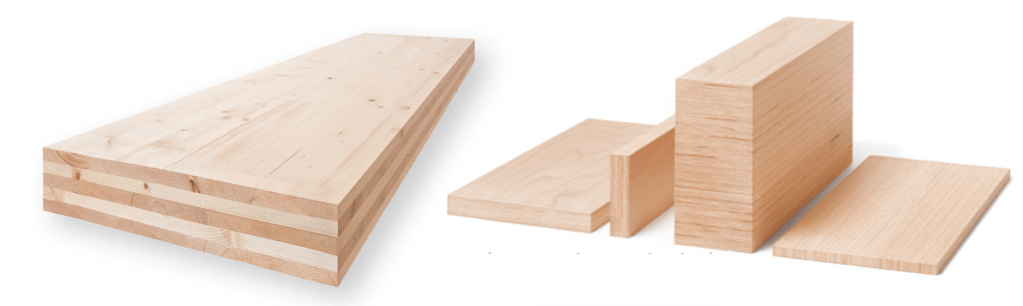
Wood is the most widely known natural, bio-based building material. Mass timber has undergone rapid development in recent years and has therefore become our key focus of ongoing research projects. By using timber to create reusable structures, designers address two core principles of circularity: renewability and reusability.
In addition to wood, materials such as bamboo, hemp, flax fibers, mycelium, and lignin-based composite fibers are gaining increasing attention. While these materials are not new, their application in building products is expanding rapidly, offering promising opportunities for more sustainable construction.
Automation & Robotics
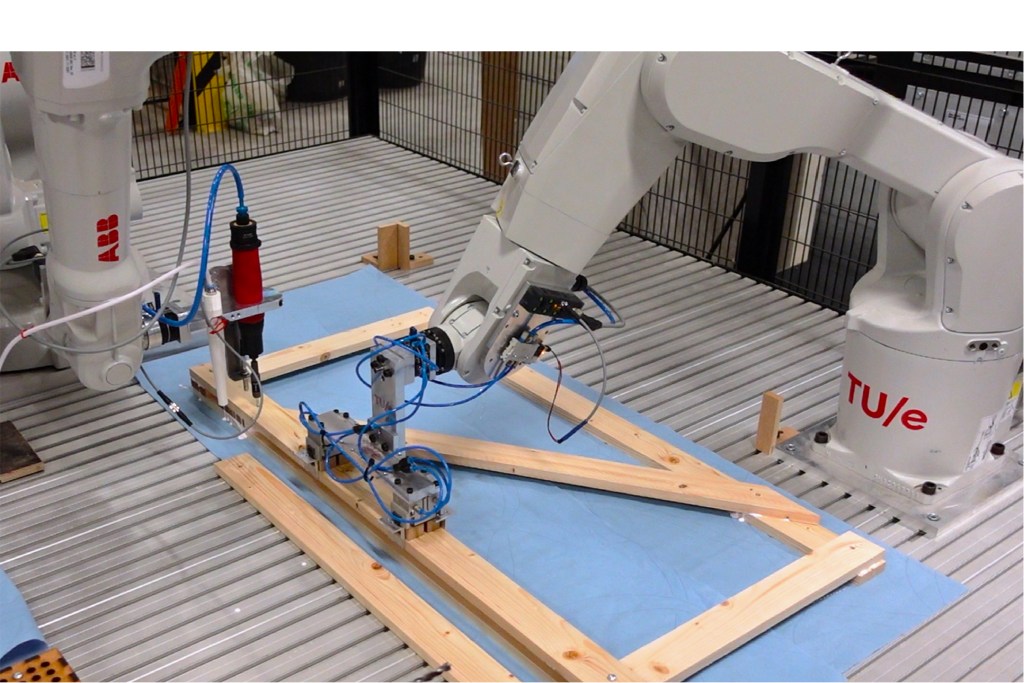
Automation and robotics enhance sustainability in construction by improving material efficiency and promoting the use of bio-based alternatives. Their precision in design, fabrication, and construction reduces over-dimensioning, cutting errors, and overall material waste. These technologies enable accurate processing of materials like timber and engineered wood, ensuring consistent quality and scalable production. By decreasing reliance on carbon-intensive materials and expanding the use of renewable resources, automation helps make the building industry to be more environmentally sustainable.
 RESED
RESED 