The impact of the horizontal shrinkage in CLT elements
Article by : T.J.M. (Thijn) Ubachs
Supervisor: Rudi Roijakkers (Lüning) & Arjan Habraken ( TU/e)
Introduction
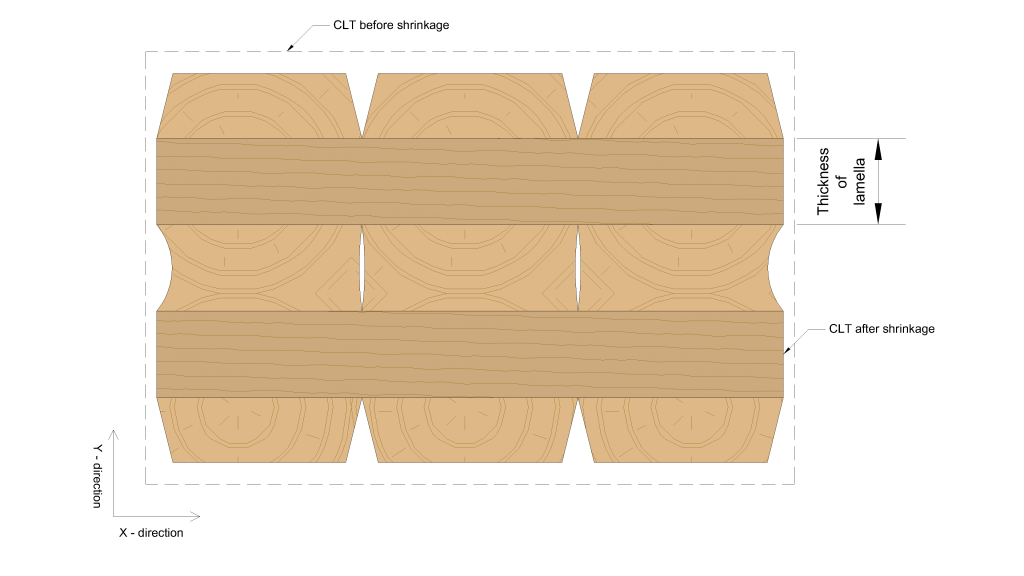
Modern building design is characterized by an increasing trend towards larger scales and greater spans, particularly within the domain of timber construction. The adoption of advanced engineered wood products, such as CLT (Cross-Laminated Timber), has facilitated the construction of mid- and high-rise buildings and long-span floor systems that were historically dominated by concrete and steel.
The use of CLT to achieve large horizontal spans (e.g., L > 40 m) means that the absolute linear deformation (∆L) caused by even small moisture content changes (∆M) becomes critical. While shrinkage in the longitudinal direction of the wood grain is relatively small, the sheer scale of a longer floor plate accumulates these minor variations into a large total potential movement.
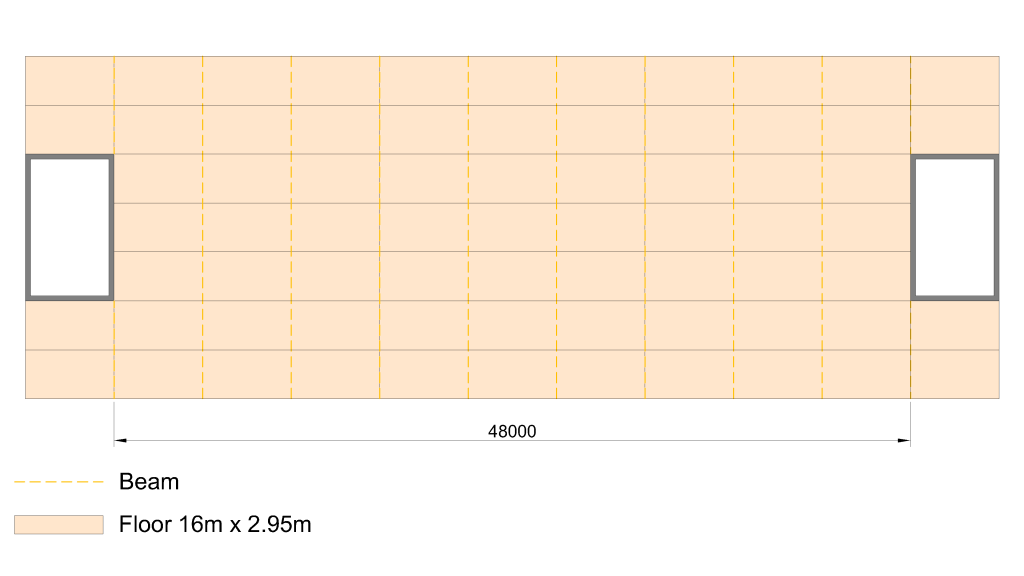
This movement poses a severe challenge to the primary lateral stability system of the building. The overall stability of the structure relies on diaphragm action, where the CLT floor panels act as rigid horizontal planes that collect lateral loads (such as wind or seismic forces) and distribute them to the vertical stabilizing elements, namely the rigid cores.
When the CLT floor plate shrinks but its movement is restrained by these fixed cores, the intended structural behavior is compromised. The restricted shrinkage converts kinematic movement into large internal tensile and shear stresses within the timber elements themselves. Consequently, this generates significant reaction forces at the connections or induces large, unintended deformations at the top of the cores, potentially degrading the stiffness of the diaphragm and threatening the overall stability of the building.
Problem definition
The adoption of the shrinkage coefficients for CLT defined in the upcoming FprEN 1995-1-1:2024 marks a significant shift in structural design practice. These updated values directly influence the calculation of dimensional changes in the in-plane direction of CLT panels. As companies increasingly pursue larger buildings with bigger horizontal spans, the impact of these prescribed shrinkage values is critically amplified. In such large structures, the total linear deformation potential becomes substantial. This deformation can either enter the connection, creating large forces, or act as an additional horizontal force on the core, creating more deformation.
The research subject, investigating the impact of shrinkage in horizontal CLT elements in mass timber buildings, was selected due to its direct relevance to the host company, Lüning. The company’s prior experience with challenges related to this specific subject provided the essential practical context and motivation for an in-depth study.
Hygrothermal Simulation
To evaluate the long-term performance and durability of the building envelope, this research employs WUFI® (Wärme und Feuchte instationär), developed by the Fraunhofer Institute for Building Physics (IBP). Unlike traditional, steady-state Glaser methods, WUFI® conducts dynamic numerical simulations of coupled heat and moisture transport under realistic, transient boundary conditions.
A critical and complex variable in this simulation is determining the hygrothermal impact of the adhesive layers within the CLT elements. Specifically, the study investigates how these bonding agents alter internal moisture behaviour, moisture accumulation, and vapor resistance across the assembly’s cross-section.
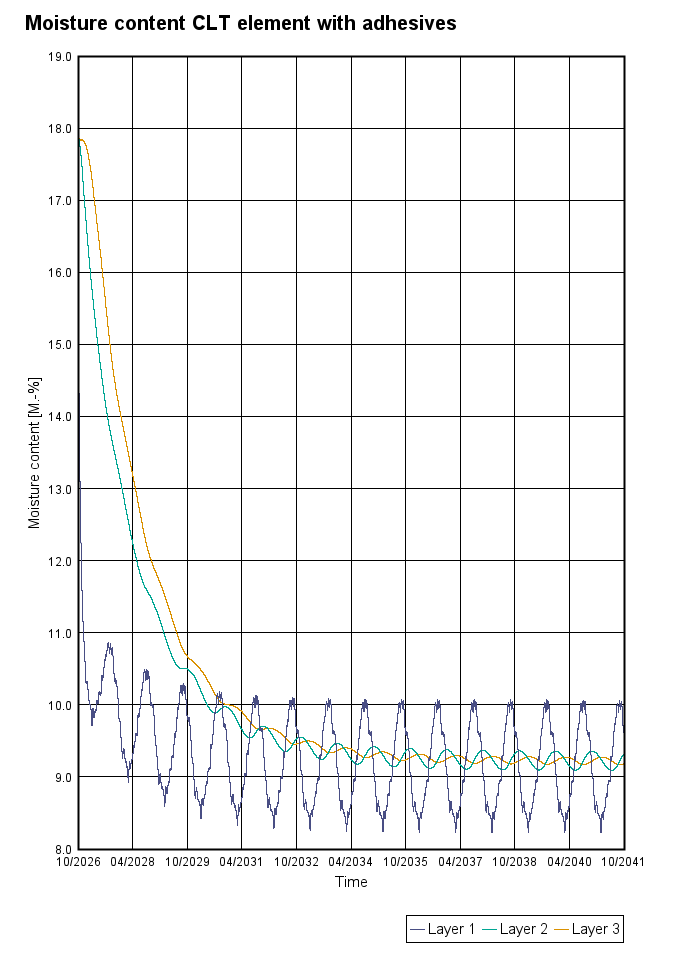
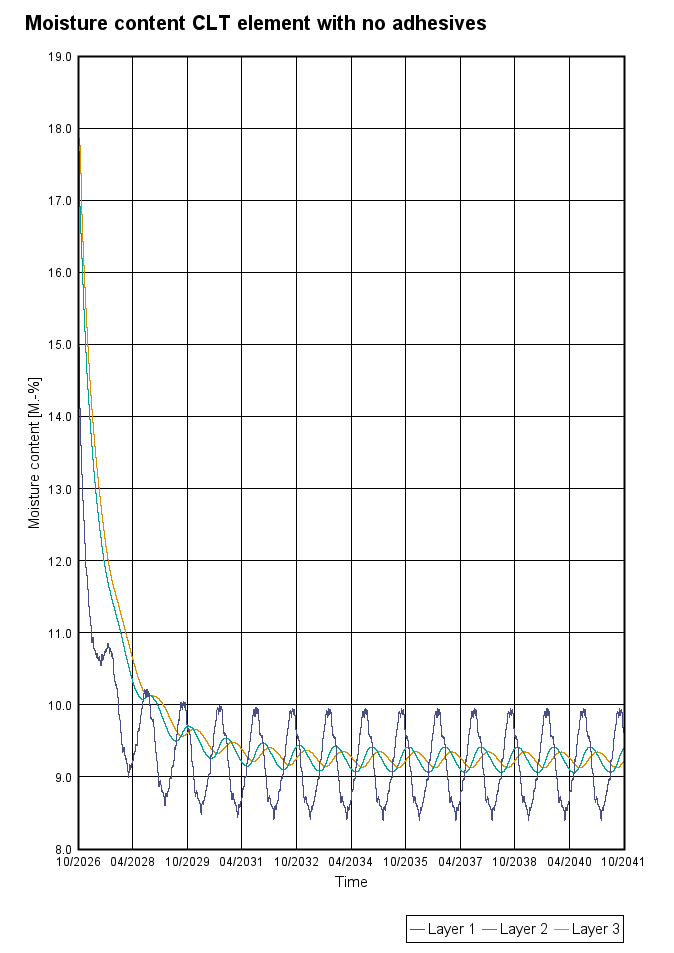
The figure below illustrates the simulated moisture content within the layers of the CLT element over time, comparing the model with adhesive interfaces against a model without adhesives. By analysing these temporal moisture gradients, the overall drying duration of a CLT element can be determined. This data allows for the quantification of how much the adhesive layers have influence on the drying process, providing a clear timeline for when the core wood layers will successfully reach safe equilibrium moisture content.
The figure below illustrates the rate of moisture vaporization through the initial layer of the panel across three distinct simulation models. The first model incorporates a layer with the material properties of the adhesives, the second utilizes predetermined parameters provided by the manufacturer XLam and the third represents a baseline model entirely excluding adhesives. By comparing these three approaches, the distinct variation between the models becomes evident, highlighting the impact that specific adhesive and material properties have on the overall moisture transport behaviour.
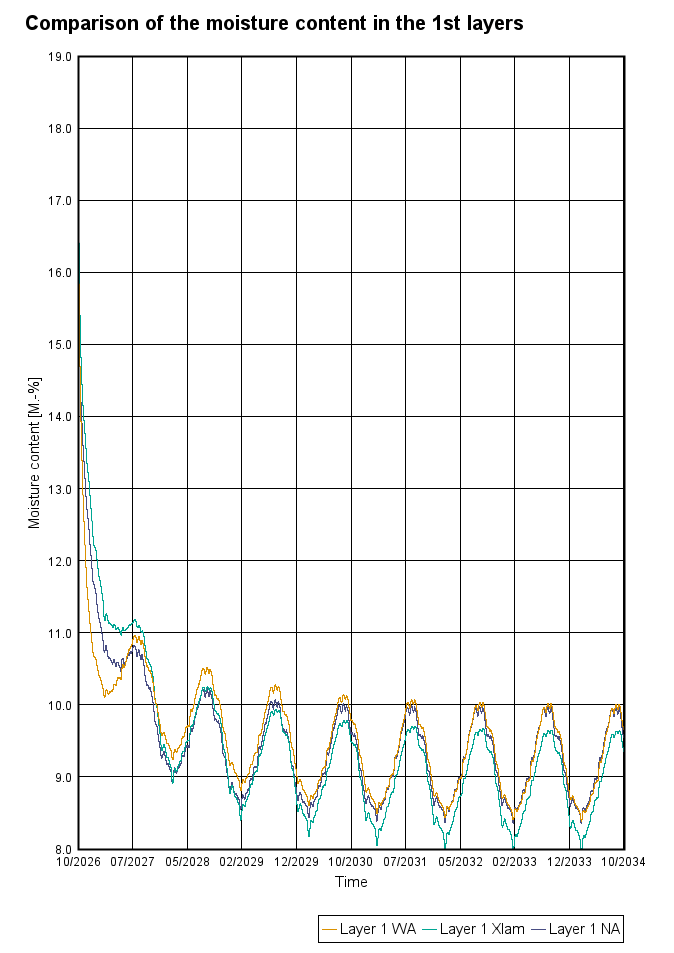
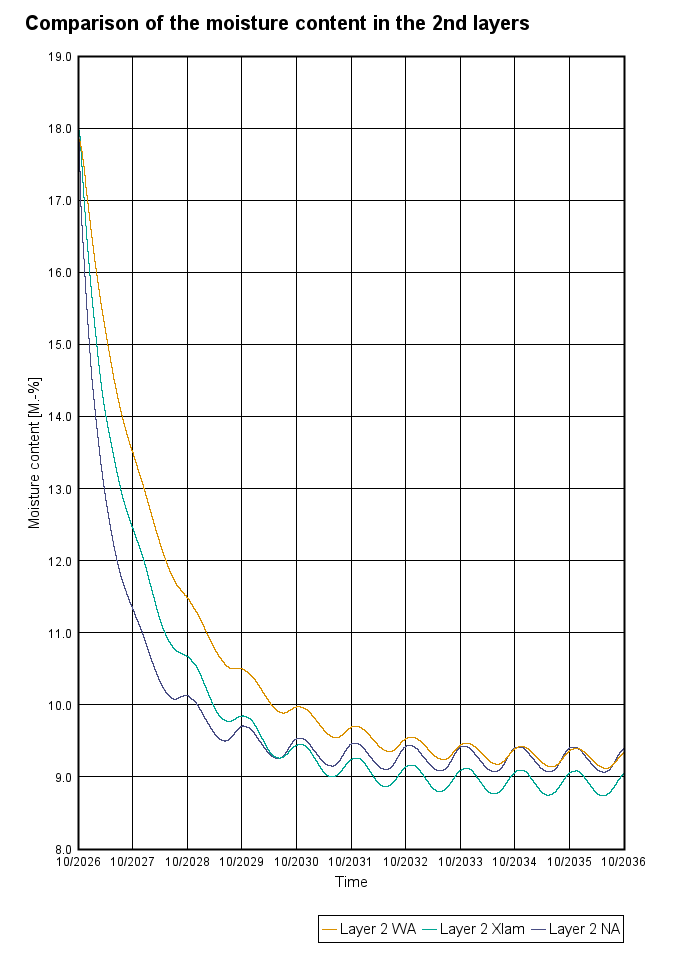
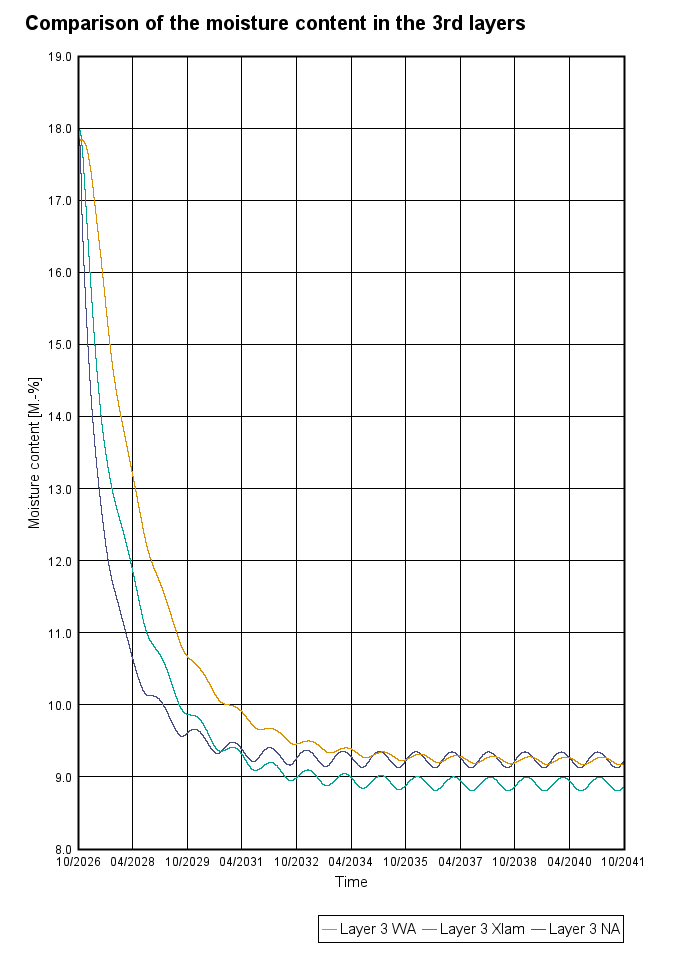
Seasonal variations directly influence the moisture profile of the top layer, with the data indicating that the equilibrium moisture content stabilizes at approximately 9% to 9.3%.
Field Measurements
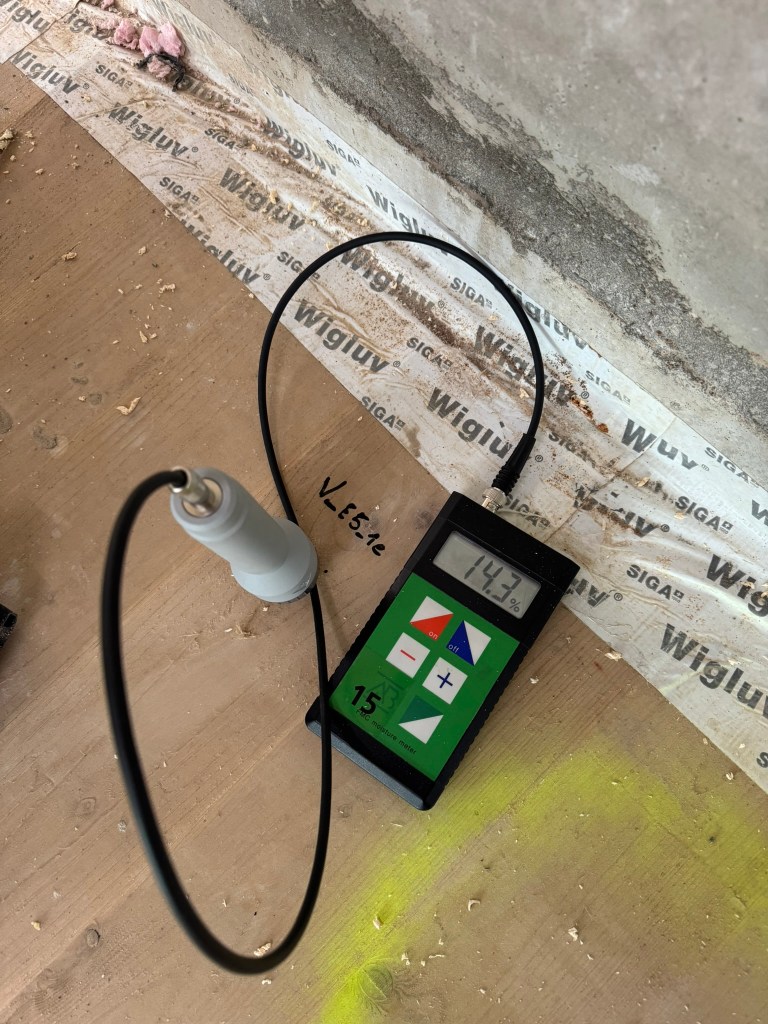
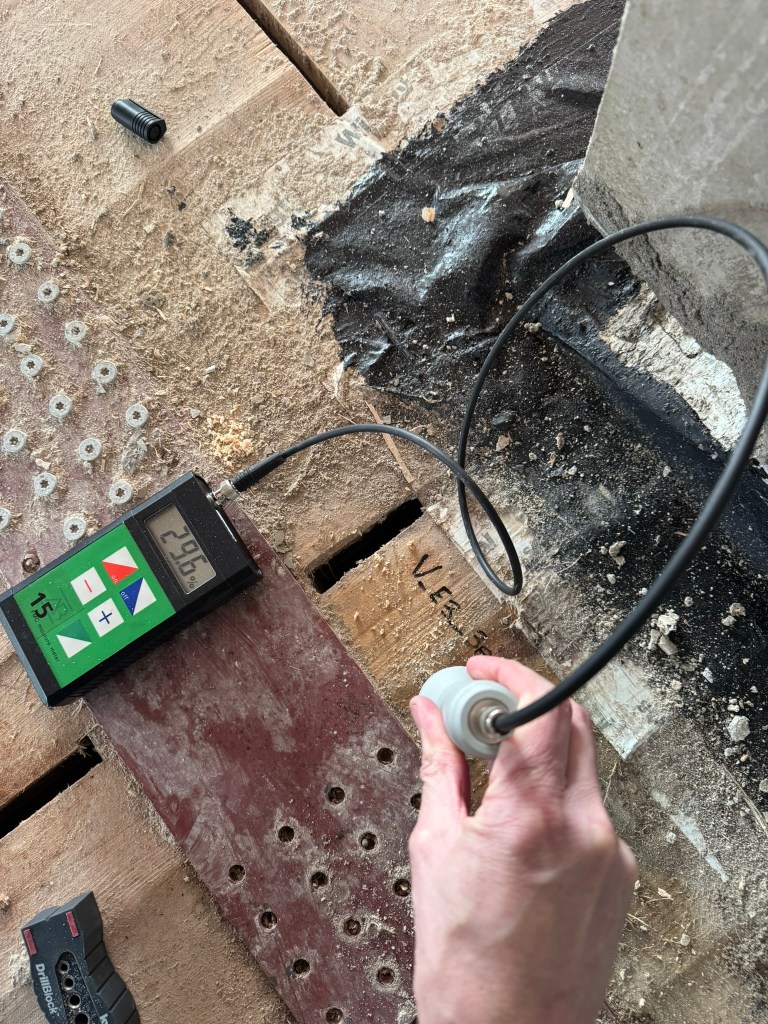
To gain deeper insight into the actual dynamics of moisture accumulation within CLT elements, in situ field measurements were conducted on an active construction project. The empirical data revealed significant localized moisture entrapment, specifically concentrated within the core layers of the CLT assembly. The measurements in the pictures below are taken in different elements but the depth of around 10cm are the same. The one on the left displays a 14.3% but the right one displays a 29.6%, which is quite high.
What is next?
In the next phase of this research, the field measurements and hygrothermal simulations will be combined to quantify the total shrinkage of the CLT elements. By correlating the simulated moisture differences with the material specific shrinkage coefficients, the resulting internal structural stresses within the CLT cross-section will be calculated.
To evaluate how these localized deformations interact with the global structure, a multi-story spring-mass model will be developed within Dlubal RFEM. This numerical model will be analysed to isolate and quantify the exact contributions of connection slip (kser) versus core restraint on various stories.
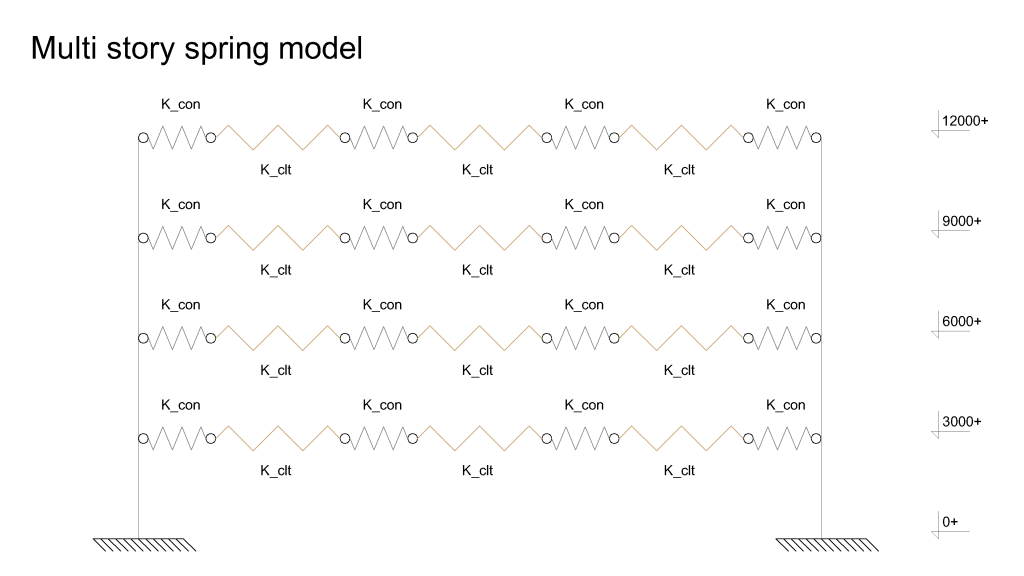
The ultimate objective is to determine how moisture-induced shrinkage reduces the load-bearing capacity of the connections. The rigid cores prevent free movement, inducing a ‘pre-loading’ effect that locks internal tensile and shear forces into the fasteners before any external environmental loads are applied.
