Experimental and numerical investigation of damping behavior in CLT floors under real building conditions
Article by : Ruben Philips
Topic: Damping of CLT floors
This research investigates the vibration behavior and damping of timber floors in real buildings. Through on-site measurements at different construction stages and comparison with theoretical and numerical models, the study aims to improve the understanding of damping, reduce overly conservative design measures and support more efficient and comfortable timber floor design.
Background
Timber is increasingly used as a structural material, driven by sustainability ambitions and the need to reduce the carbon footprint of buildings. Timber floor systems offer clear benefits: they are sustainable, lightweight, have good strength-to-weight ratio and allow for slender designs.
However, compared to traditional concrete floors, timber floors often have lower stiffness and lower mass. This makes them more sensitive to human-induced vibrations caused by activities such as walking, running or jumping. Although these vibrations do not pose a safety concern, they can affect user comfort and in many cases vibration criteria govern the design of the floor.
In practice, designers often introduce additional measures to improve vibration comfort, for example by increasing the floor thickness or adding mass. While effective, these measures can lead to heavier and more material-intensive solutions than structurally necessary and reduce the sustainability .
To make more adequate, efficient, and sustainable timber floor designs, improved insight is needed into the real vibration performance of timber floors under practical building conditions.
Vibration performance and damping
The vibration performance of a timber floor system is mainly governed by three parameters:
- Stiffness
- Mass
- Damping
Stiffness and mass can generally be estimated with reasonable accuracy based on structural geometry and material properties. Damping, on the other hand, is much more difficult to predict. It depends on many factors, such as connection behaviour, boundary conditions, floor build-up, finishing layers, and non-structural components.
Damping is a key parameter in human-induced vibrations, as it directly affects the amplitude and decay of the response. Whereas mass and stiffness primarily determine the magnitude and frequency of vibrations, damping governs their duration and rate of energy dissipation. Low damping is one of the main causes of excessive human-induced floor vibrations in buildings [1]. Inadequate knowledge of this parameter makes it difficult to design efficiently.
Despite its importance, damping is often the least understood and studied of the three governing parameters, mainly due to its complexity. In practice, damping values are commonly taken from tables in guidelines and standards (such as Eurocode 5), where damping ratios are recommended based on floor type and build-up, but often without detailed explanation. This approach does not fully account for many design- and construction-related influences that affect damping in reality.
If damping is underestimated, floors may be over designed, resulting in heavier and more material-intensive solutions which undermine the sustainability benefits of timber. Therefore, a key point for the development of environmentally friendly timber structures, is an enhanced knowledge on damping phenomena [2].
To investigate this phenomena in this study, on-site vibration measurements will be carried out in real buildings. These measurements provide insight into the actual dynamic response and damping in a realistic situation, which is often too complex to accurately capture through modeling alone.
Methodology
To investigate the vibration behavior of timber floors in real buildings, this research combines on-site measurements with comparison to theoretical and numerical models. The research is carried out in several steps. First, on-site measurements are performed. Afterwards, the measurement data is processed and analysed to determine the modal properties of the floor. Based on the measured results, a numerical model is developed and calibrated, which can then be used to investigate the behavior further.
On-side measurements
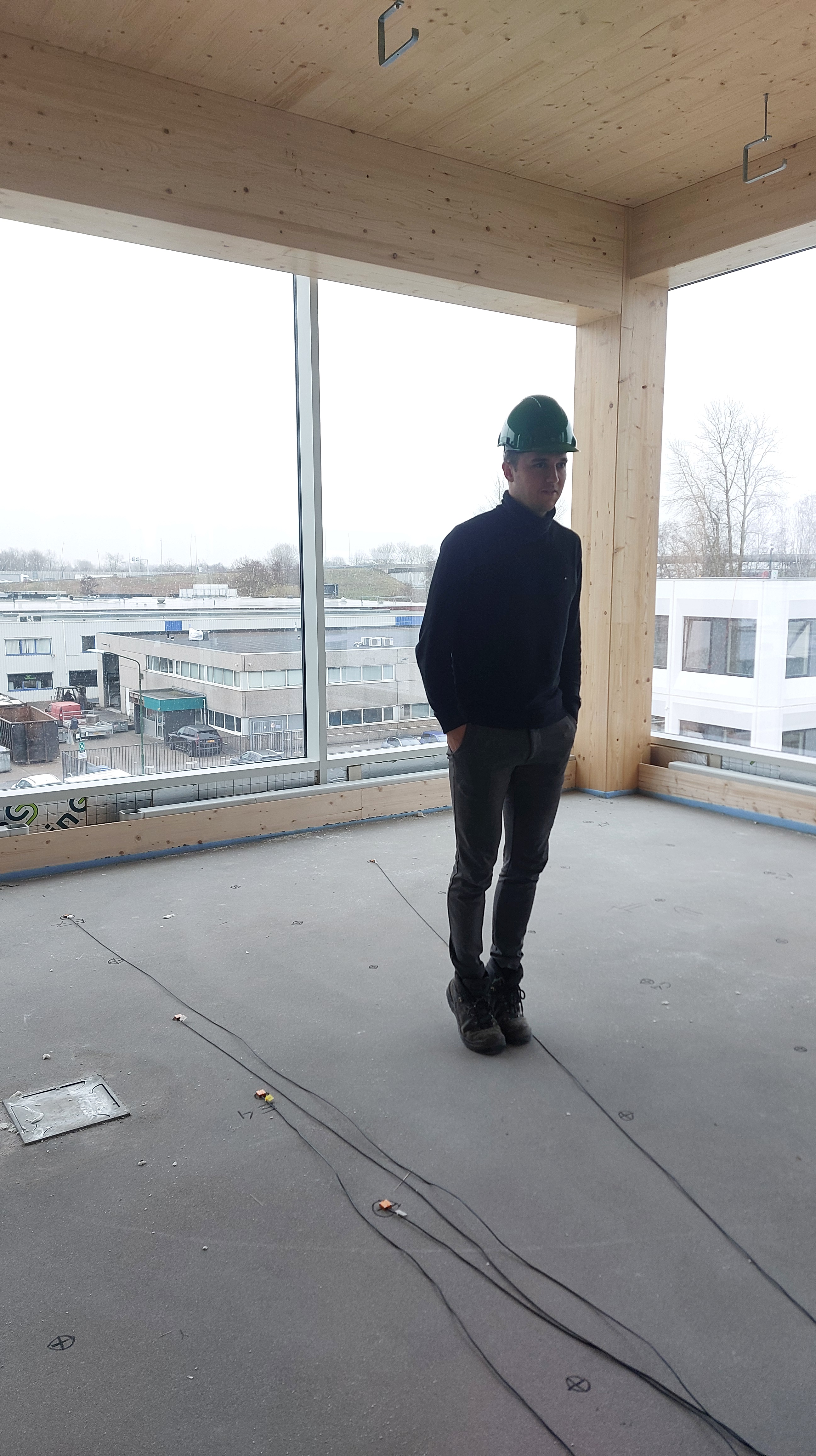
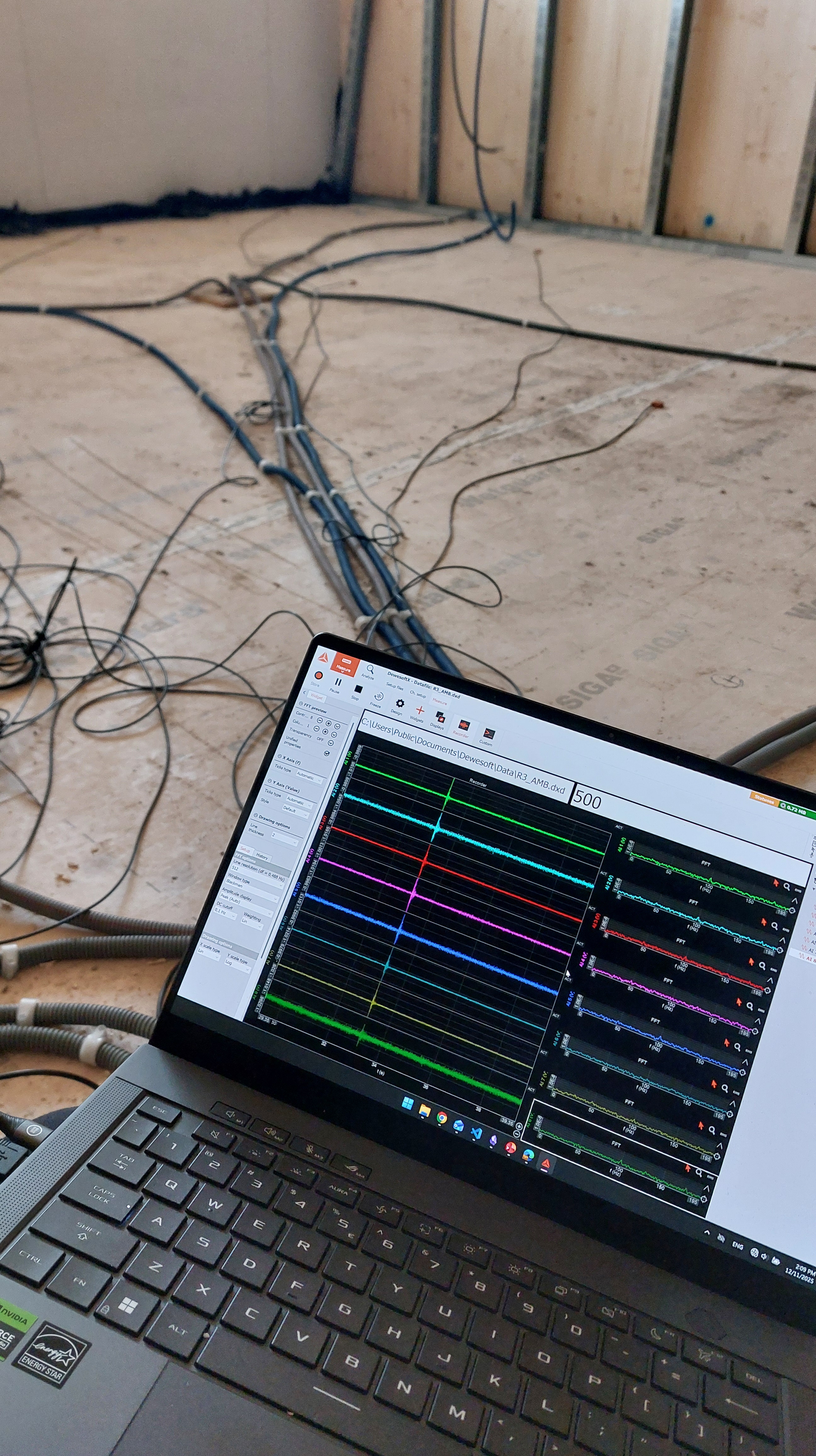
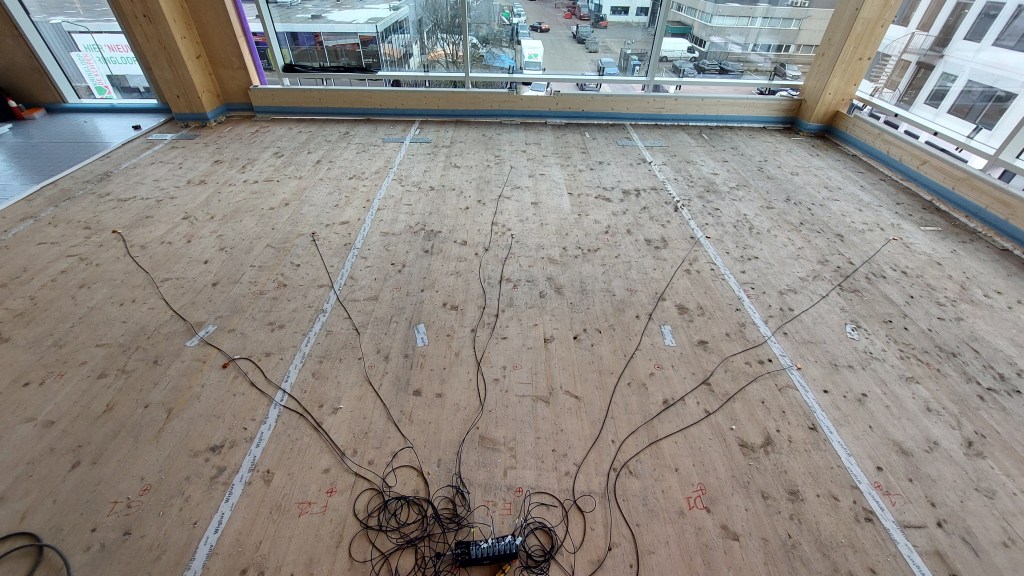
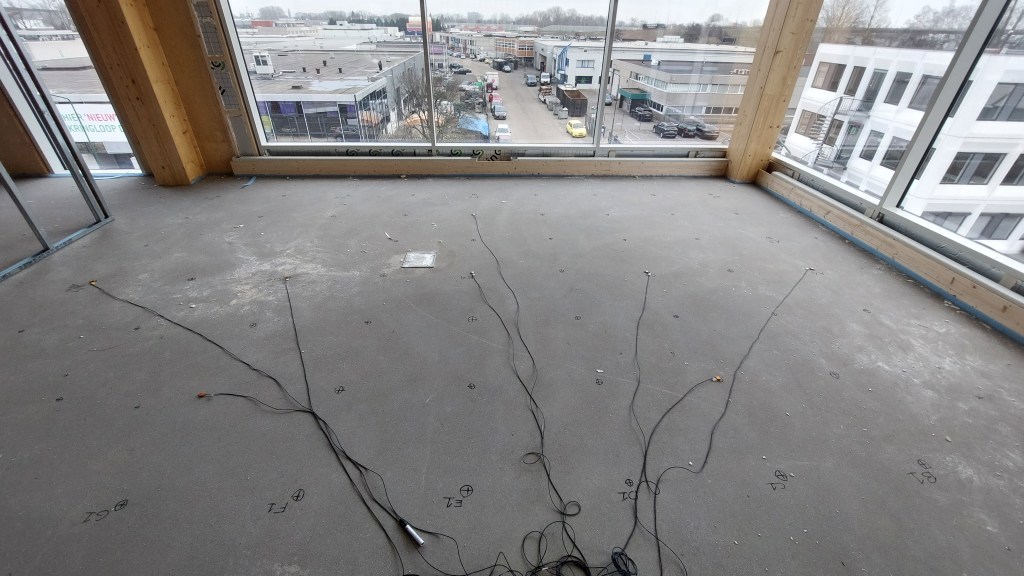
Currently, measurements are being done in two case studies. The first case is a project in Veldhoven, where measurements are performed on both the bare CLT floor and the floor after the finishing layer has been applied. This office building consists of a fully timber structural system, with the CLT floor supported by a beam–column structure. The second case is a project in Amsterdam, where measurements are performed on the bare CLT floor and again after the finishing layer has been applied. This residential building also consists of a fully timber structural system, but the CLT floor is supported by CLT wall elements.
The floors are excited by three different persons performing walking, heel drops, and jumps at different locations on the floor. Each heel drop and jump is performed three times per person at each excitation location. This repetition is used to improve the reliability of the measurements and to capture the variability that naturally occurs between individuals and repeated excitations.
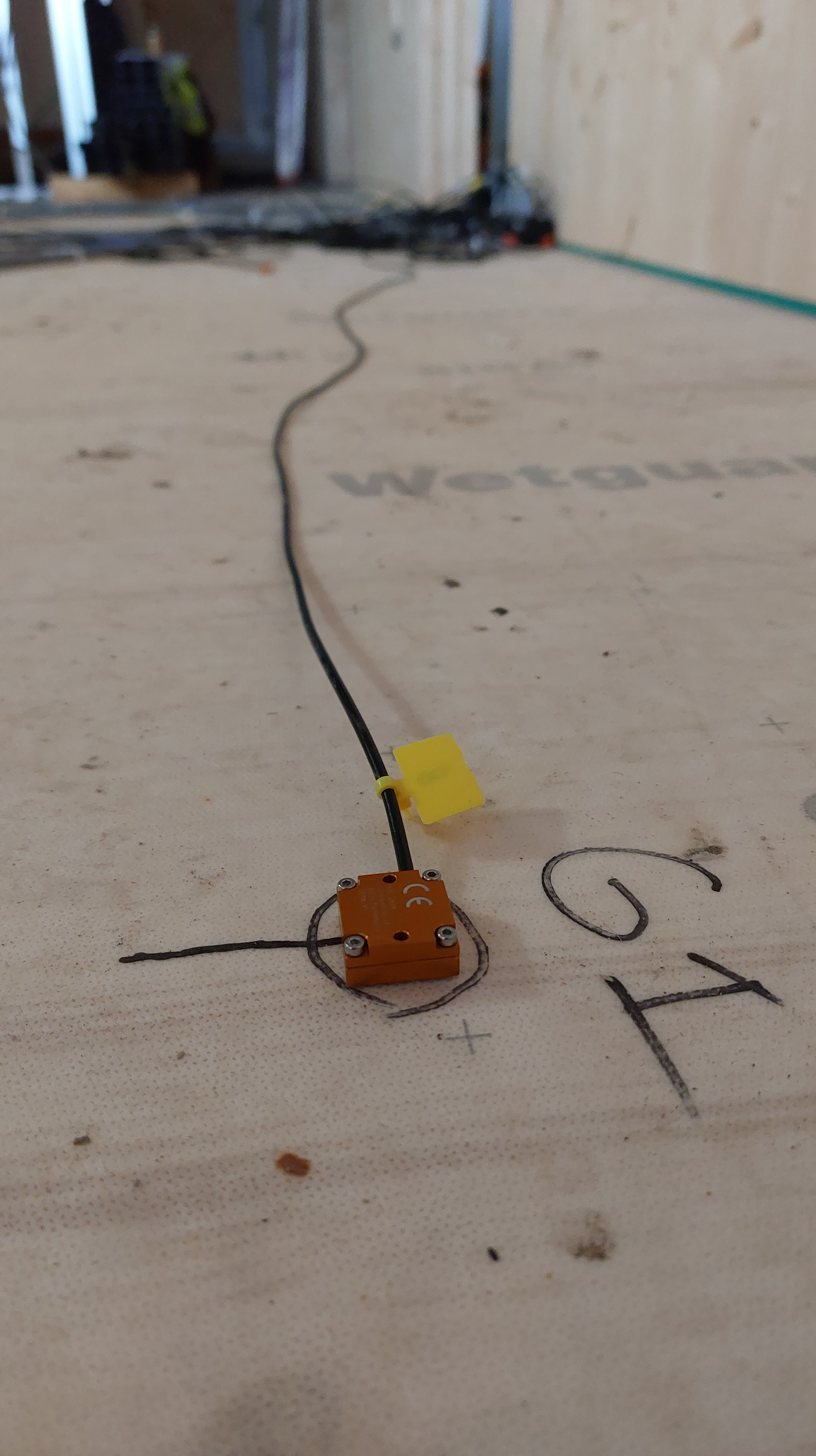
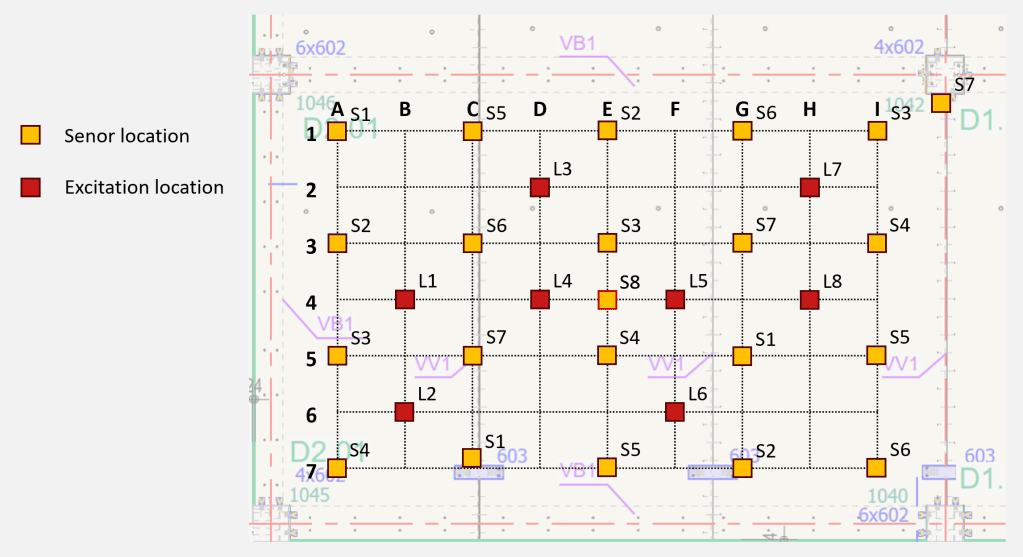
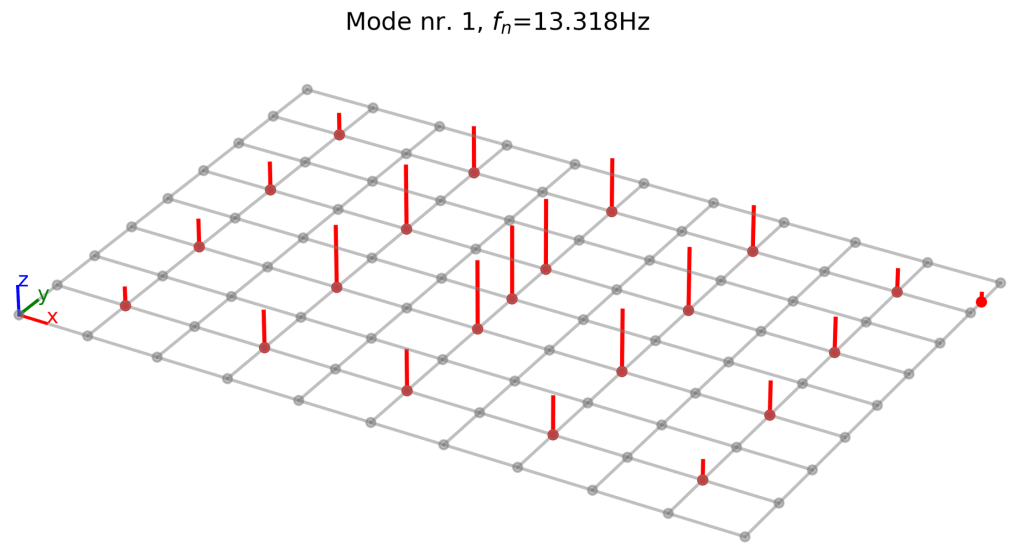
The vibration response of the floor is measured using eight accelerometers. The sensors are positioned in a grid for each setup, with the aim of capturing multiple vibration modes and as much of the floor behavior as possible. Also a roving sensor setup is used in which one sensor is kept fixed as a reference sensor, while the other sensors are moved between measurement setups. With fixed excitation locations and roving sensor positions, the response can be captured at more locations across the floor. Figure 4 shows an example of a measurement setup, and Figure 5 presents an example of the first mode shape obtained by performing Operational Modal Analysis (OMA).
OMA will be used to detect the modal properties of the measured floors, including natural frequencies, mode shapes and damping ratios. This analysis is performed for all measurements, including the different persons, excitation types, excitation locations, construction phases, and sensor locations. By carrying out a large number of measurements, the aim is to obtain a robust overview of the vibration behavior of the floors and to investigate whether statistical correlations can be identified between the measured response, the extracted modal properties and influencing parameters.
Collaboration
This research is performed in collaboration with engineering firm Arup in Amsterdam and Research Center Noorderruimte, part of Hanze University of Applied Sciences (Groningen).
Reference
[1] Ibrahim Saidi, Nick Haritos, Emad F Gad, and John L Wilson. Floor vibrations due to human excitation-damping perspective. Technical report, 2006. 1
[2] Nathalie Labonnote. Damping in Timber Structures. Technical report, NTNU-trykk, Trondheim, Norway, 2012. 2
 RESED
RESED 