A Parametric Framework for Modelling the Influence of Semi-Rigid Connections on Unbraced Timber Gridshell Behaviour
Linking connection behaviour to global structural performance
Article by : Kaj Hasenaar
Supervisors: Arjan Habraken, Joey Janssen, Rudi Roijakkers
The construction industry is under increasing pressure to reduce its environmental impact while meeting the growing demand for buildings and infrastructure. Responsible for approximately 37% of global carbon dioxide emissions, the sector is working on improvements that use materials more efficiently without compromising structural performance (UNEP, 2023; OECD, 2019). Timber has emerged as one of the most promising alternatives to conventional construction materials due to its high strength-to-weight ratio, renewability and ability to store carbon throughout its service life. As a result, timber is increasingly being applied in long-span and architecturally expressive structures.
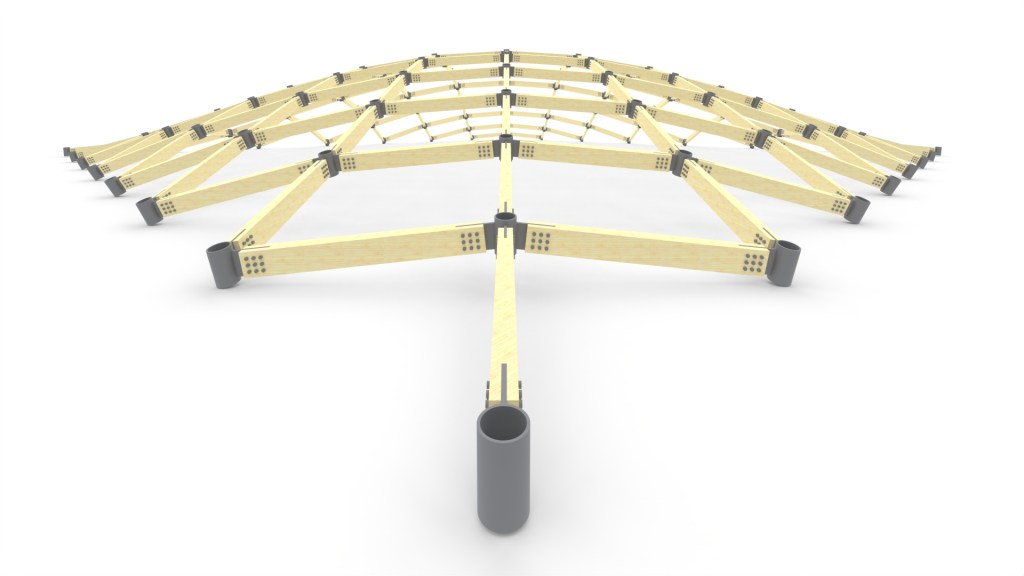
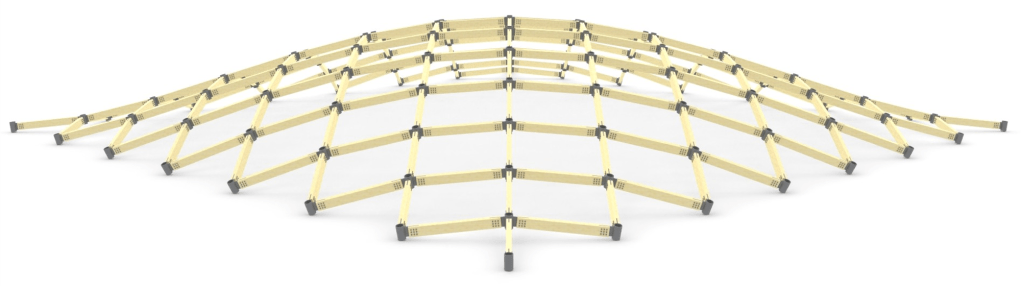
Among these structural systems, timber gridshells are among the most efficient applications of engineered timber. Rather than relying primarily on bending resistance, gridshells exploit their double-curved geometry to transfer loads predominantly through axial forces. This allows large spans to be achieved using remarkably slender structural members and creating lightweight structures. However, the efficiency of this structural behaviour depends strongly on the continuity between the individual members. Small changes in connection behaviour can significantly influence how forces are redistributed throughout the shell and, consequently, its overall stiffness and stability.
In practice, however, a gridshell rarely behaves as its idealised structural form suggests. Fabrication tolerances, construction imperfections, asymmetric loading and second-order effects inevitably introduce bending moments into the structure (Adriaenssens et al., 2014), increasing the importance of the rotational stiffness provided by the connections. While structural members are generally well understood and can be modelled accurately, the behaviour of semi-rigid steel–timber connections remains considerably more difficult to predict. Their stiffness arises from the interaction among dowel bending, timber embedment, and local slip, making them neither perfectly pinned nor fully rigid. Nevertheless, simplified assumptions are still commonly adopted in engineering practice because they offer convenient boundary conditions for structural analysis.
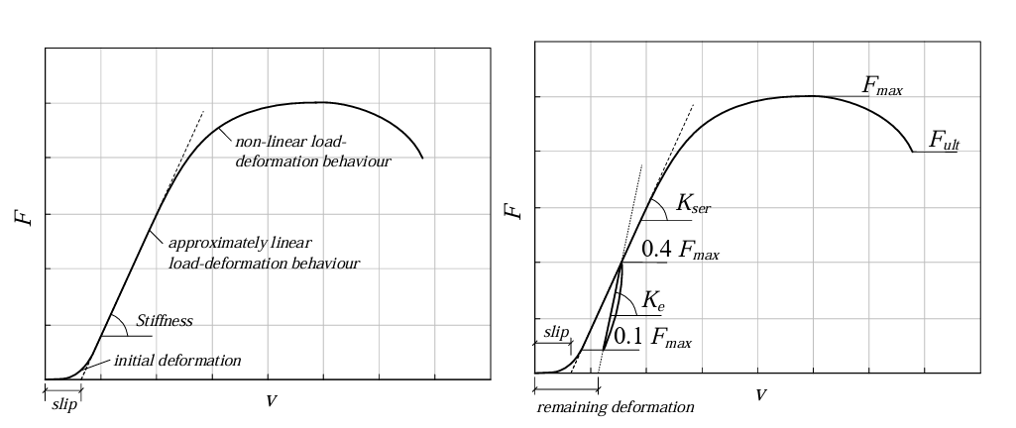
Current design standards, including Eurocode 5, provide practical procedures for estimating connection stiffness through the slip modulus. Although these expressions have proven reliable for routine structural design, they primarily relate stiffness to timber density and fastener diameter. Important parameters such as embedment length, force angle, and bolt-group geometry are not explicitly considered. As a result, designers have limited insight into how modifications to a connection influence its rotational stiffness, or how these local changes propagate to the behaviour of an entire structural system.
This limitation becomes particularly relevant during the conceptual design phase. Engineers can readily evaluate alternative structural geometries using modern computational tools, yet connection stiffness is often assumed rather than calculated as a design parameter (Dyvik, Manum and Rønnquist, 2021). Consequently, global structural optimisation and local connection design are frequently performed as largely independent processes. Bridging this gap requires a methodology capable of predicting connection stiffness directly from its geometric and material properties while simultaneously linking these predictions to the behaviour of the complete structure.
The objective of this research was therefore to develop a parametric framework that establishes a direct relationship between local connection mechanics and global structural behaviour. The study focuses on semi-rigid steel–timber knife-plate connections with smooth dowels in double shear, a connection detail commonly used in timber structures due to its compact geometry, lack of slip, and efficient load transfer. Rather than treating rotational stiffness as an assumed modelling parameter, the proposed framework predicts it analytically from the governing material and geometric properties, then directly applies the resulting stiffness within a global structural model.
The central research question addressed in this study is therefore:
How do material and geometric parameters influence the rotational stiffness of semi-rigid steel–timber knife-plate connections, and how does this stiffness affect the global structural behaviour of unbraced timber gridshells?
Answering this question required investigation across multiple structural scales. The research, therefore, combines global parametric structural analyses, analytical modelling of individual dowel connections, and numerical finite-element validation within a single computational workflow. The global analyses first establish the rotational stiffness required to achieve stable structural behaviour, after which an analytical model is developed to predict how this stiffness can be realised through practical connection design. Finally, the analytical formulation is validated numerically before being integrated into a unified stiffness-informed design methodology. By linking these traditionally separate stages, the proposed framework provides engineers with a practical approach for incorporating semi-rigid connection behaviour directly into the design of timber gridshells.
Understanding Global Behaviour
Before investigating the mechanics of individual connections, it is first necessary to understand the role they fulfil within the complete structural system. Although increasing connection stiffness generally improves structural stability, it also results in larger, heavier and more expensive connection details. From both a structural and sustainability perspective, the objective is therefore not to maximise rotational stiffness, but to determine the minimum stiffness required to ensure safe and efficient structural behaviour. Establishing this target formed the first stage of the research.
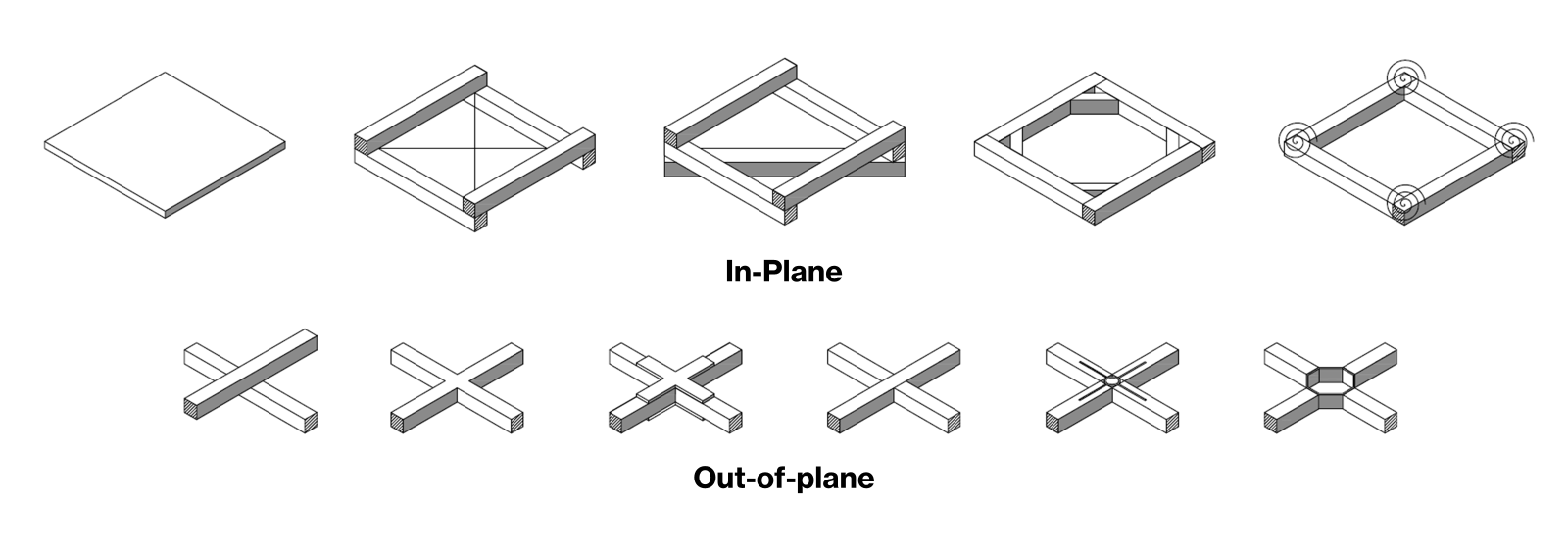
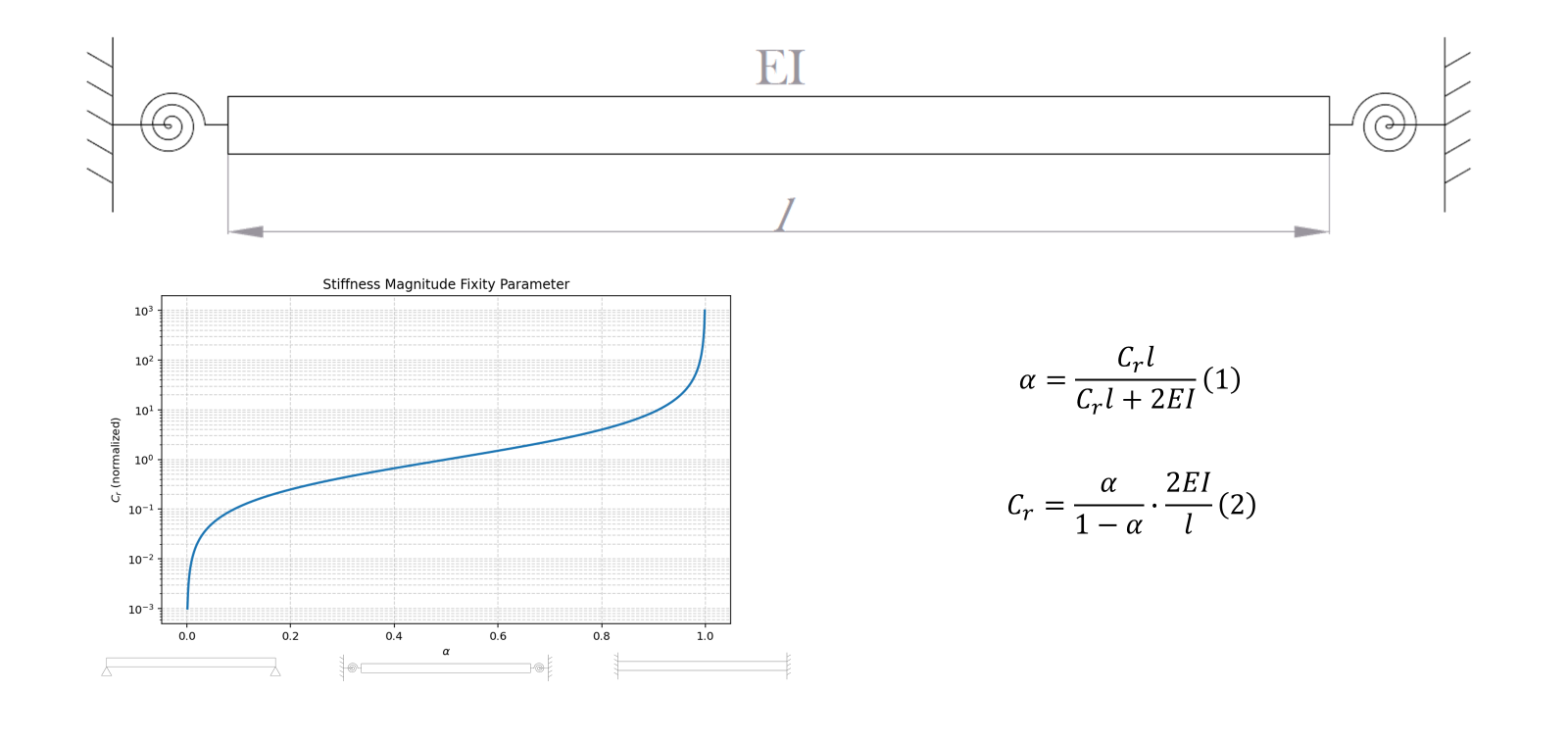
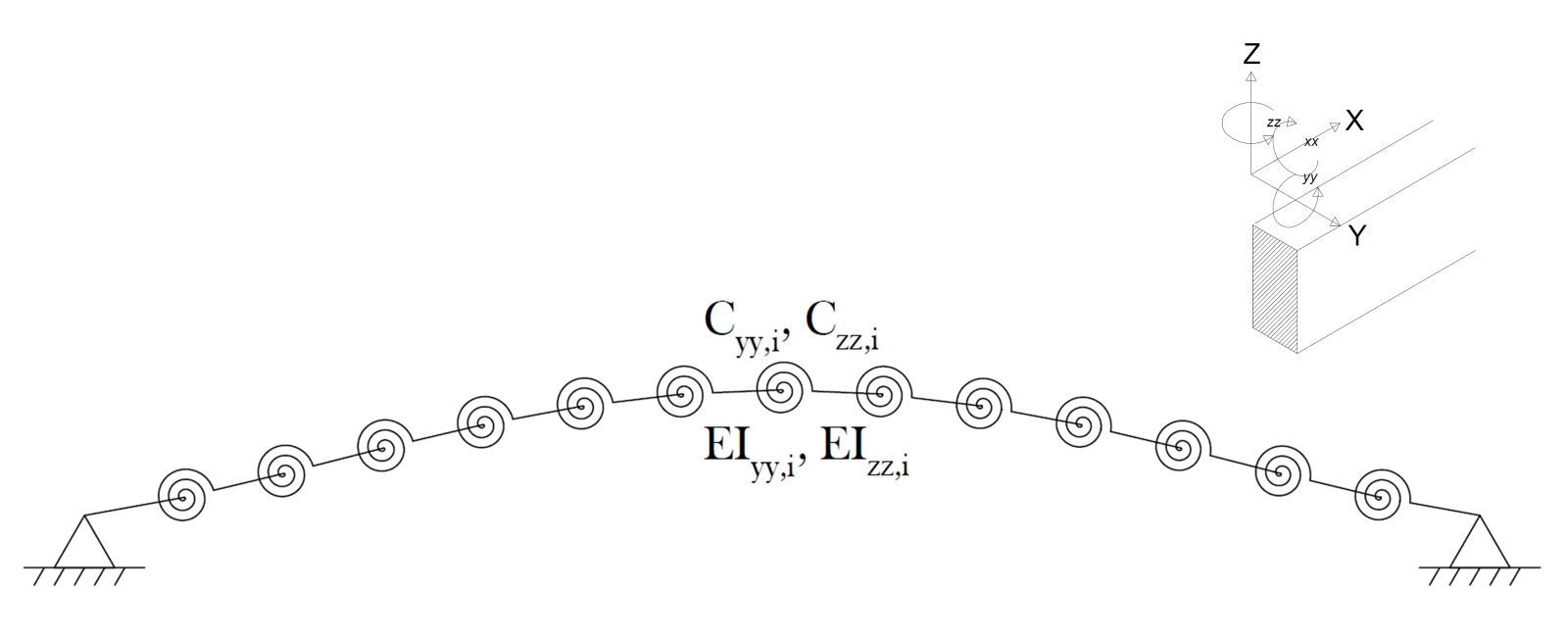
To investigate this relationship, a parametric global model of an unbraced timber gridshell was developed using Grasshopper and analysed in RFEM6. The gridshell was represented using beam elements connected by rotational springs, allowing the stiffness of every connection to be varied independently. Rather than specifying the springs by absolute stiffness values, their behaviour was expressed in terms of a dimensionless fixity parameter (Larsson, 2018). This parameter relates the rotational stiffness of the connection to the bending stiffness of the connected members, enabling comparison of different geometries and structural scales using a common reference. However, this makes the results’ solution spaces not applicable to all gridshell configurations. Those sharing a similar geometry are likely to encounter a similar trend, the reliance on in- and out-of-plane stiffness.
The parametric model was used to investigate two common gridshell configurations: an orthogonal grid and a diagonal grid. Both structures shared identical overall dimensions, grid density, member sizes, support conditions and loading, ensuring that any observed differences could be attributed mainly to the orientation of the structural grid and the stiffness of the semi-rigid connections. This direct comparison enabled investigation of how connection stiffness affects different grid orientations while eliminating the effects of other design variables.
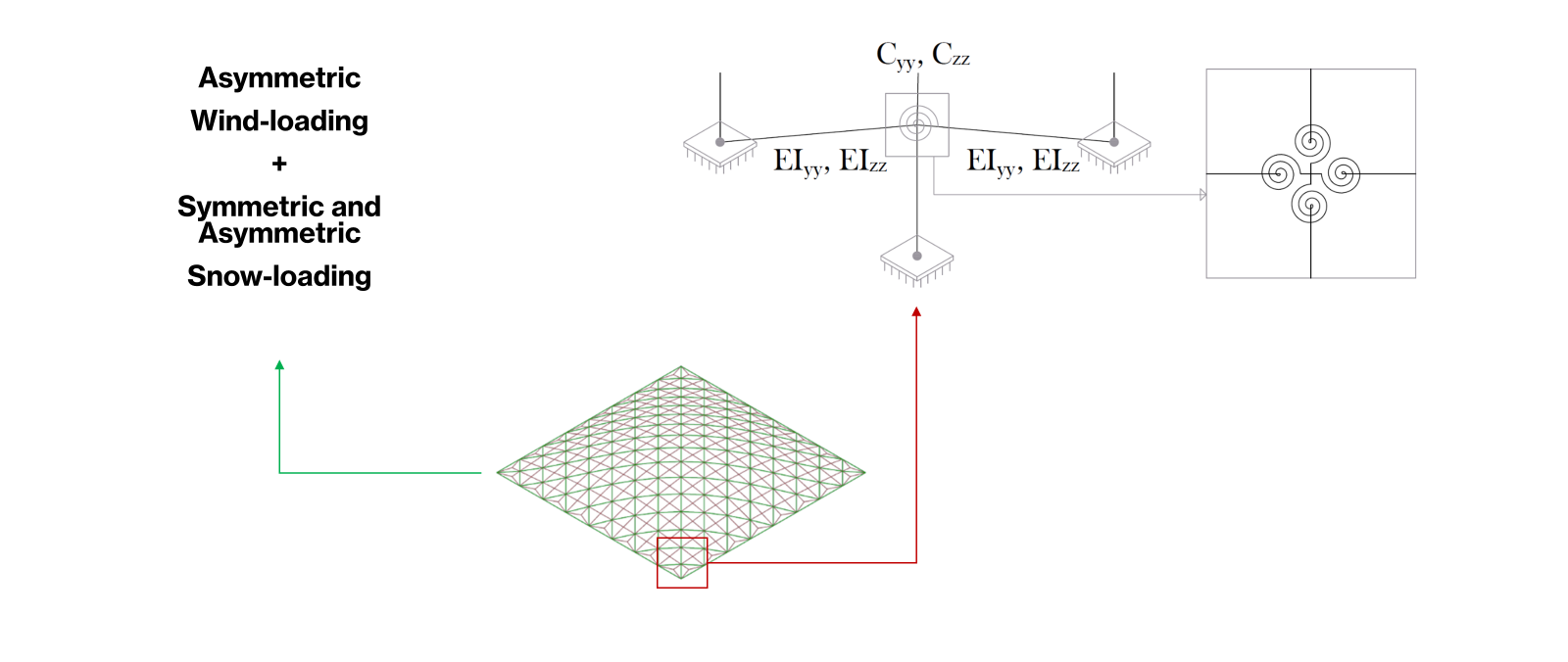
To evaluate structural performance under realistic loading conditions, eight representative load cases were considered, including permanent loading, multiple snow distributions, and wind loading, in accordance with Eurocode recommendations. For each load case, both the in-plane and out-of-plane rotational stiffnesses of the connections were systematically varied over a wide range. The resulting analyses evaluated global deflections, internal force distributions, member utilisation and the point of non-convergence for the evaluated outputs, generating response surfaces that illustrate how the structural behaviour changes as a function of connection stiffness.
The analyses demonstrated that both gridshell configurations are highly dependent on connection stiffness, although in different ways. The orthogonal gridshell exhibited a strong coupled dependence on both the in-plane and out-of-plane rotational stiffness. Reducing either stiffness direction increased global deflections, redistributed internal forces towards bending and shear-dominated behaviour and reduced the range of stiffness combinations capable of maintaining stable convergence. These results indicate that orthogonal grids require relatively balanced stiffness in both rotational directions to fully exploit membrane action.
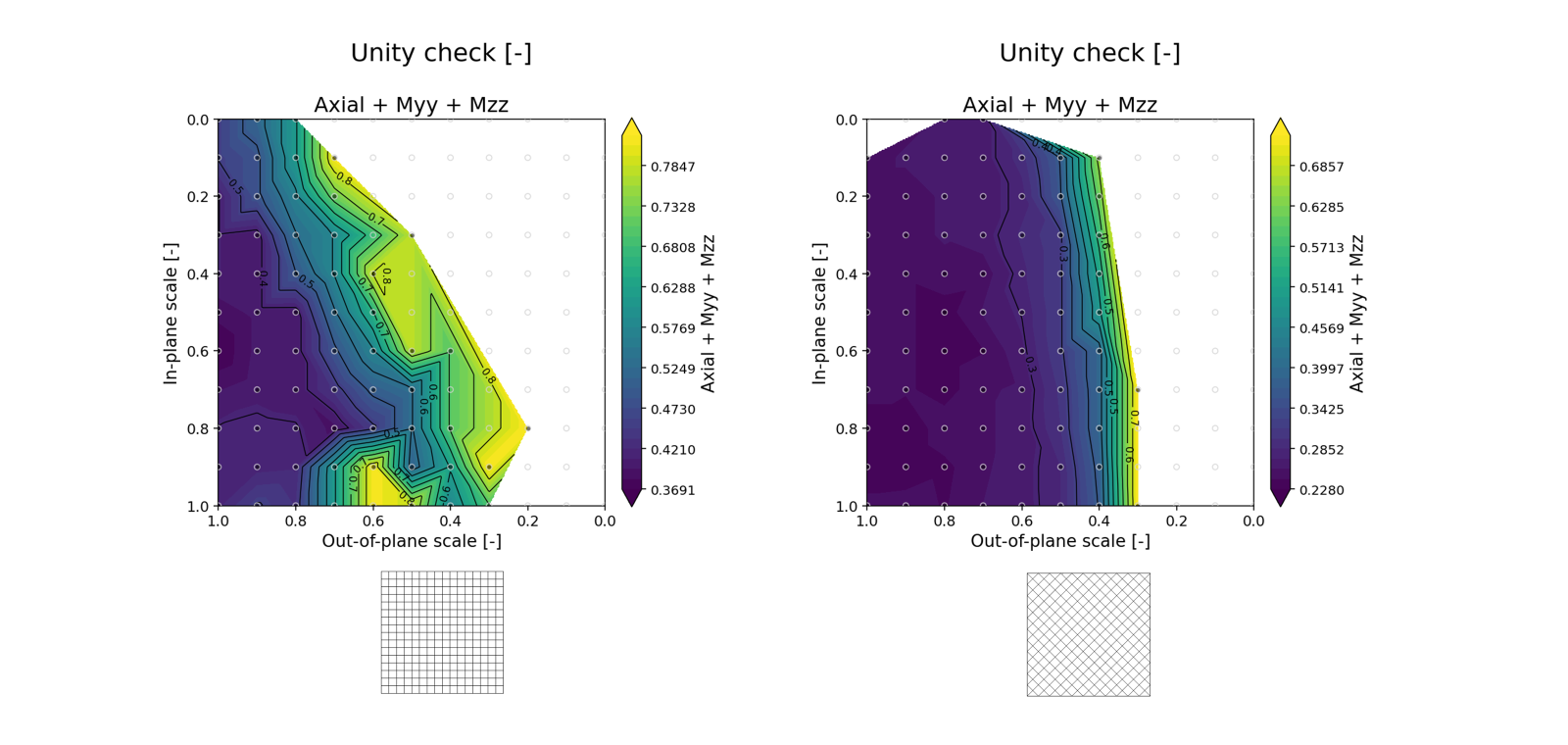
The diagonal gridshell exhibited a markedly different response. While its behaviour remained sensitive to out-of-plane rotational stiffness, the influence of in-plane stiffness proved considerably smaller across much of the investigated parameter space. This observation is particularly significant because steel–timber knife-plate connections naturally provide relatively low in-plane stiffness. Rather than representing a disadvantage, this directional stiffness characteristic aligns well with the structural demands of the diagonal grid, making it inherently better suited to the investigated connection detail.
Beyond identifying the relative importance of the two stiffness directions, the parametric analyses also revealed a lower stiffness limit for the tested configurations. For both gridshell configurations, numerical convergence became increasingly difficult below a fixity of approximately 0.3, indicating that the connections no longer provided sufficient rotational restraint to maintain stable structural behaviour. Although this threshold should not be interpreted as a universal design limit, it demonstrates that connection stiffness cannot be reduced indefinitely without fundamentally altering the structure’s load-carrying behaviour. Excessively flexible connections diminish membrane action, increase bending effects, and ultimately compromise structural stability.
These findings highlight an important principle for connection design. The objective is not to maximise rotational stiffness, nor to minimise it for the sake of material efficiency. Instead, the connection should provide sufficient stiffness to ensure stable structural behaviour.
Understanding Local Connection Behaviour
Having established the rotational stiffness required for stable global behaviour, the next step was to determine how to achieve this stiffness through practical connection design. While the global analyses identified the required structural performance, they did not explain how individual connection parameters contribute to rotational stiffness. Answering this question requires moving from the structural scale to the mechanical behaviour of a single connection, where the interaction between the steel dowel and the surrounding timber governs the overall response.
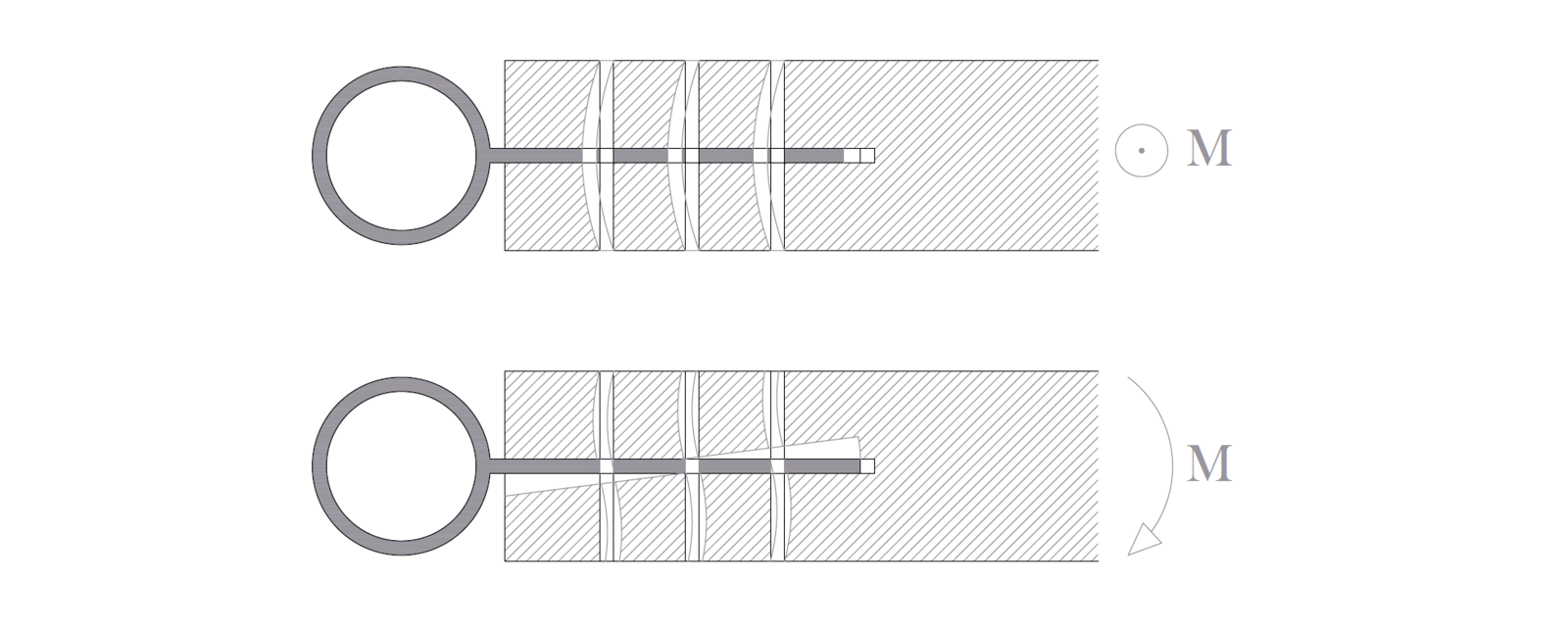
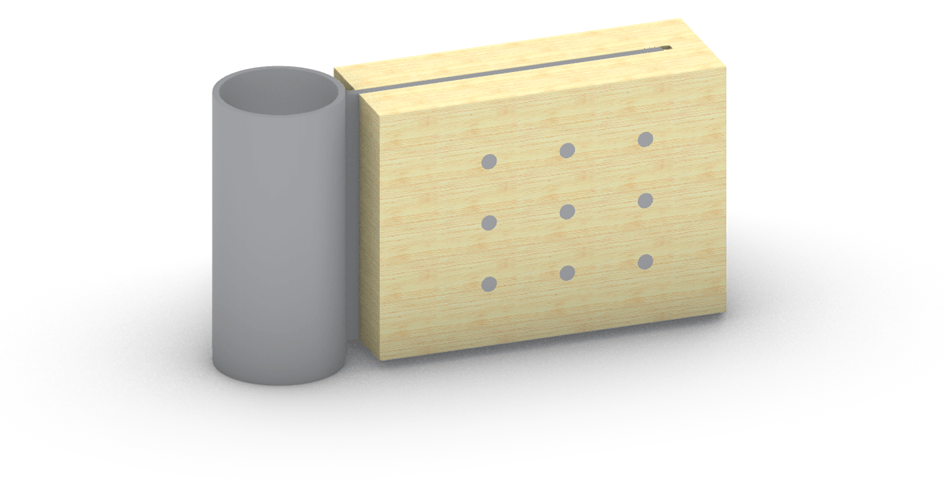
The investigated connection consists of a concealed steel knife plate connected to a timber member using tightly fitted smooth dowels in double shear. This connection detail is widely applied in timber engineering because it combines a compact geometry with efficient force transfer while maintaining the architectural appearance of an exposed timber structure. Unlike conventional bolted connections, smooth dowels transfer load almost entirely through bearing between the steel dowel and the surrounding timber. As a result, the rotational stiffness is governed primarily by two interacting mechanisms: the dowel’s bending deformation and the embedment of the surrounding timber.
Existing design methods generally represent this behaviour through empirical stiffness values, such as the slip modulus prescribed in Eurocode 5. Although these expressions provide reliable estimates for routine engineering design, they offer limited insight into the physical mechanisms governing rotational stiffness or the influence of individual geometric parameters. To provide this physical insight, an analytical model was developed based on the classical Beam-on-Elastic-Foundation (BOEF) formulation (Hetényi, 1946). In this approach, the dowel is modelled as a beam continuously supported by an elastic timber foundation. Rather than assuming that the timber reacts only at a limited number of discrete points, the formulation accounts for the continuous interaction between the dowel and the surrounding timber along the full embedment length. This allows both dowel bending and timber embedment to be represented simultaneously in the stiffness value.
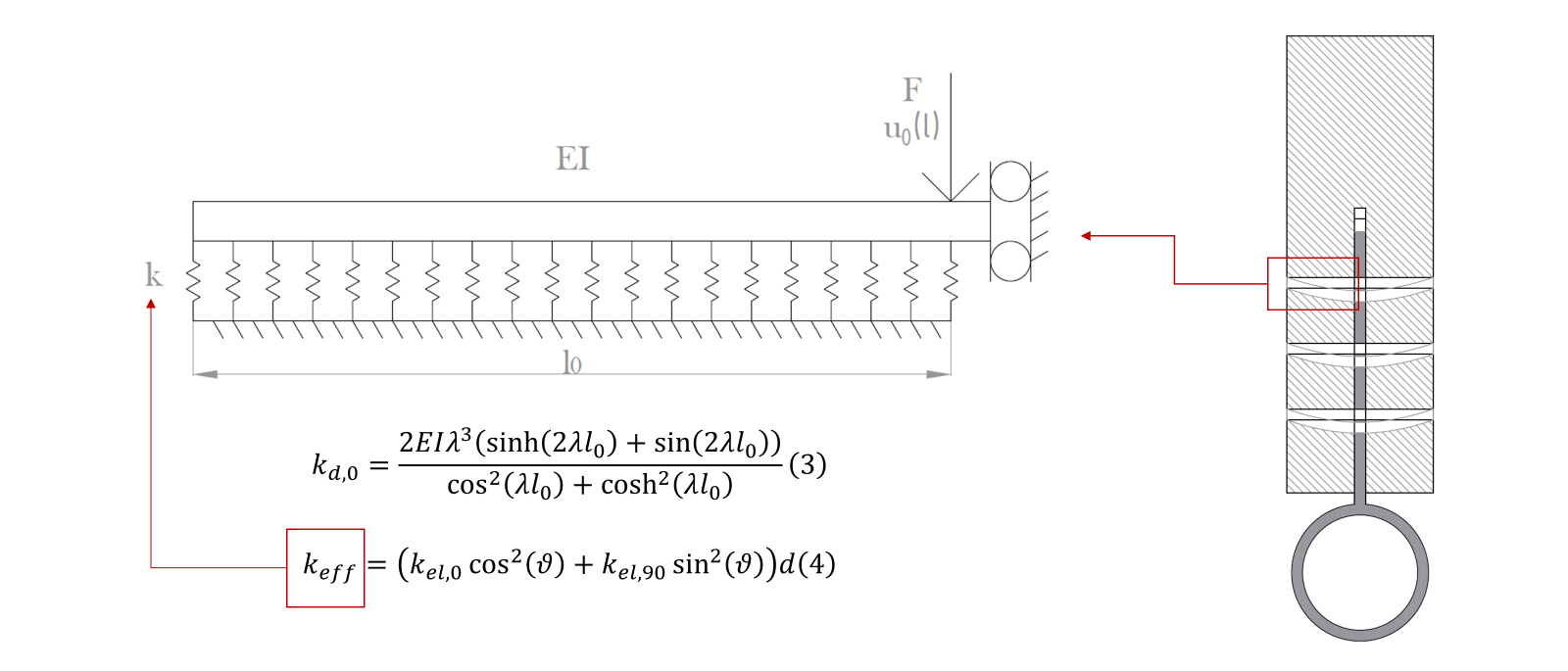
An important advantage of the BOEF formulation is that the stiffness of the timber foundation can be related directly to measurable material properties. Experimental relationships were therefore used to describe embedment stiffness as a function of timber density, while accounting for the orthotropic nature of timber by considering the loading angle relative to the grain direction. Timber provides significantly greater resistance parallel to the grain than perpendicular to it, causing the stiffness of the elastic foundation to vary continuously with the direction of loading. Incorporating this behaviour enables the analytical model to represent realistic connection behaviour.
Once the analytical formulation had been established, a systematic parameter study was performed to investigate the influence of four governing variables: dowel diameter, timber density, embedment length and force angle relative to the grain. Together, these parameters describe the principal geometric and material characteristics available to engineers when designing dowel-type timber connections.
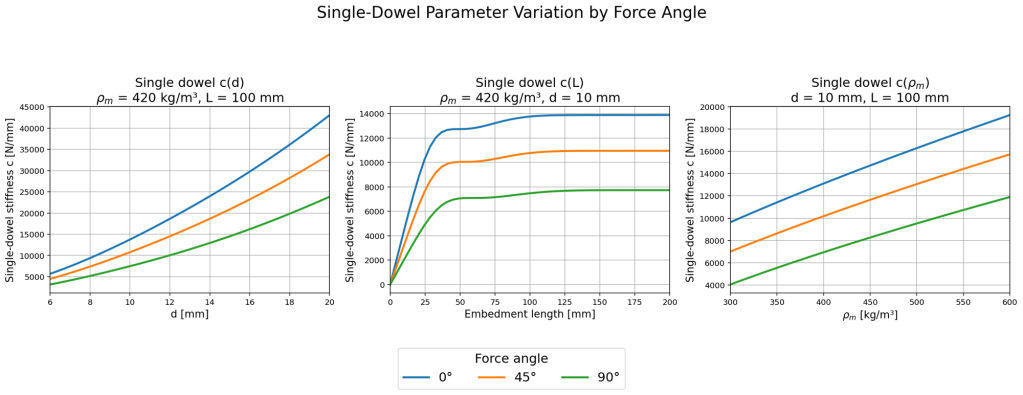
Among the investigated parameters, dowel diameter had the greatest influence on rotational stiffness. Increasing the diameter simultaneously increases the bending stiffness of the steel dowel and enlarges the contact area available for load transfer into the surrounding timber. These two mechanisms reinforce one another, resulting in a substantial increase in rotational stiffness over the investigated diameter range.
Timber density also contributed positively to rotational stiffness, although its influence proved considerably smaller than that of dowel diameter. Since denser timber provides greater resistance to local embedment deformation, the elastic foundation supporting the dowel becomes stiffer, increasing restraint on the dowel against bending.
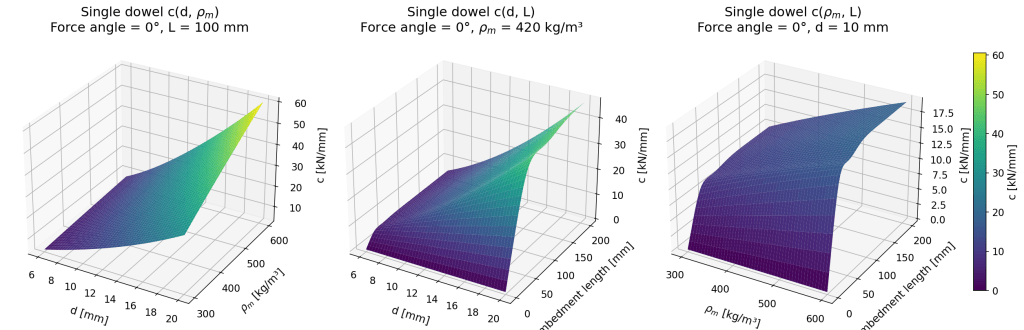
The most distinctive behaviour, however, was observed for embedment length. Unlike the other parameters, embedment length does not simply increase or decrease the stiffness of the existing load-transfer mechanism. Instead, it fundamentally changes how forces are transmitted between the dowel and the surrounding timber.
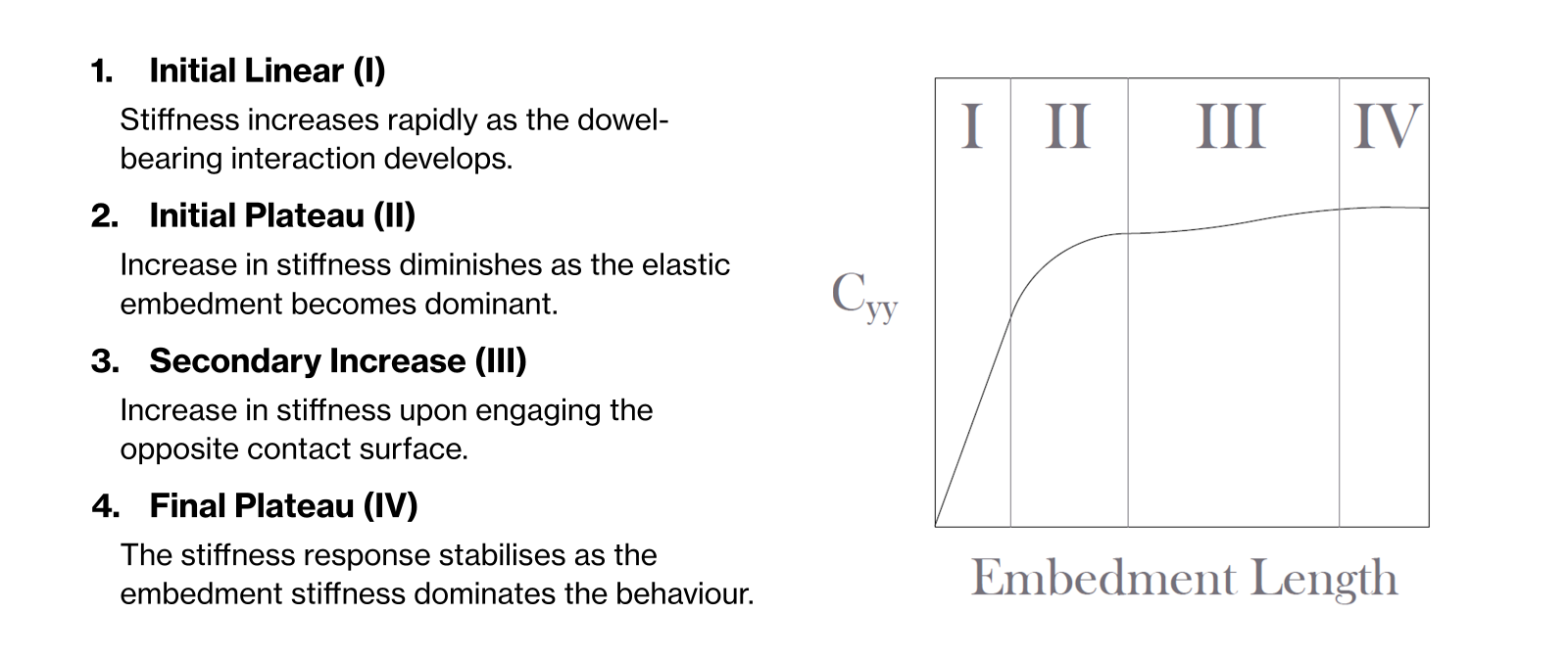
For short embedment lengths, increasing the embedment length rapidly increases rotational stiffness because a larger portion of the dowel engages the surrounding timber. As additional timber participates in resisting the applied load, the distributed bearing stresses develop over a larger contact region, resulting in a significant increase in rotational restraint. Beyond this initial increase, however, the rate of stiffness development decreases and approaches a first plateau. At this stage, extending the dowel further into the timber contributes only limited additional stiffness because the existing contact mechanism has already been largely mobilised.
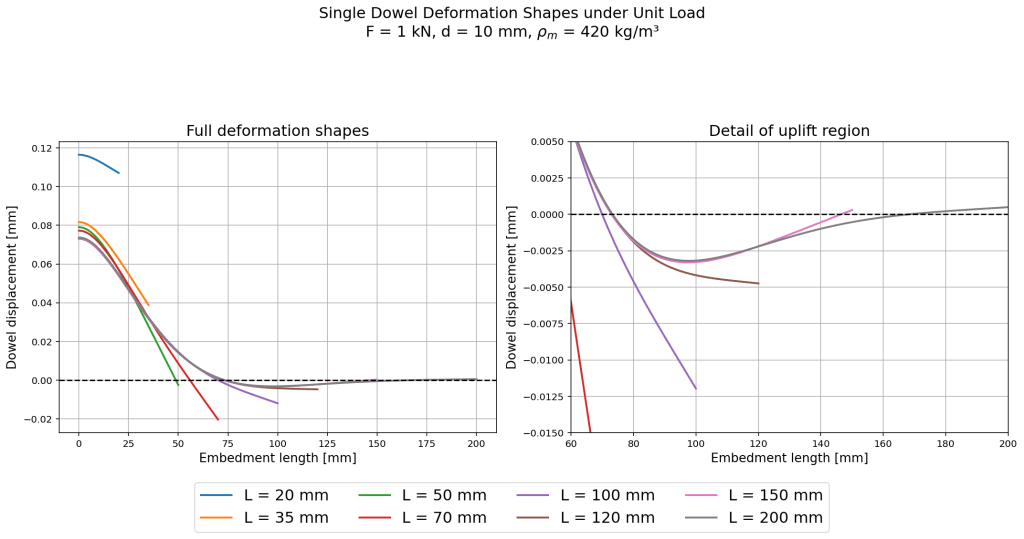
Further increasing the embedment length produces a second increase in rotational stiffness. Examination of the analytical deformation profiles showed that this behaviour originates from the gradual engagement of the opposite side of the dowel hole. Initially, load transfer occurs predominantly through compression on one side of the dowel. As the dowel bends further into the timber, deformation becomes sufficient to establish contact on the opposite side of the hole, introducing an additional load-transfer mechanism that further increases rotational stiffness. Eventually, both contact mechanisms become fully mobilised, producing a second plateau where further increases in embedment length provide only marginal improvements.
This four-stage stiffness development is one of the principal findings of the research, as it demonstrates that embedment length influences not only the magnitude of the connection stiffness but also the underlying mechanics governing force transfer. From a practical design perspective, the first plateau is of particular interest. Beyond this point, additional embedment rapidly becomes less efficient while increasing both the dimensions and material consumption of the connection. The analyses therefore indicate that reaching the first plateau provides an effective balance between structural performance and material efficiency.
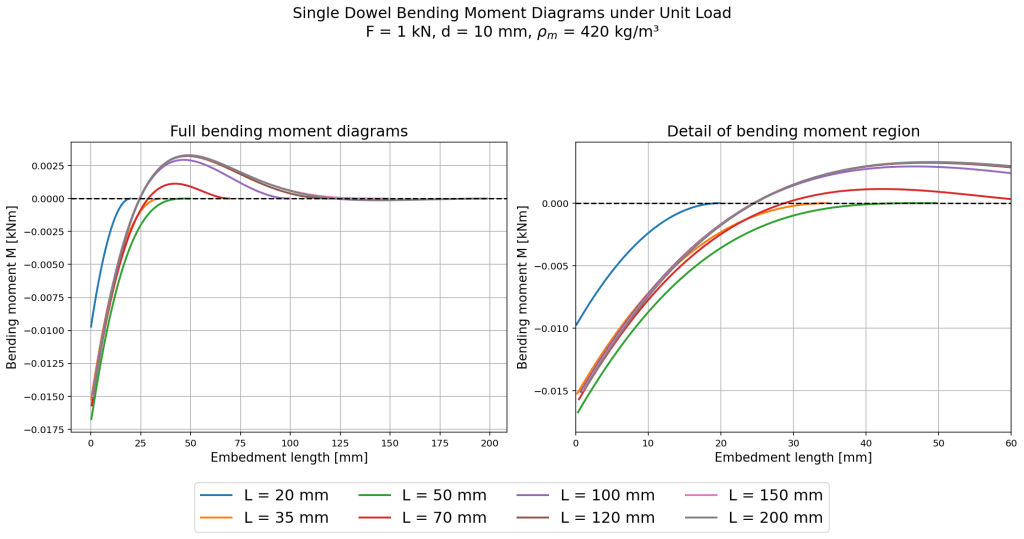
The deformation profiles further support this interpretation. For relatively short embedment lengths, the dowel develops a single dominant bending region near the steel knife plate, corresponding closely to the yielding mechanism assumed in Eurocode 5. Increasing the embedment length gradually introduces a second bending region deeper within the timber, explaining the secondary increase in stiffness predicted by the analytical model. This observation illustrates how the distributed support provided by the timber foundation fundamentally alters the structural behaviour of the dowel compared with simplified empirical formulations.
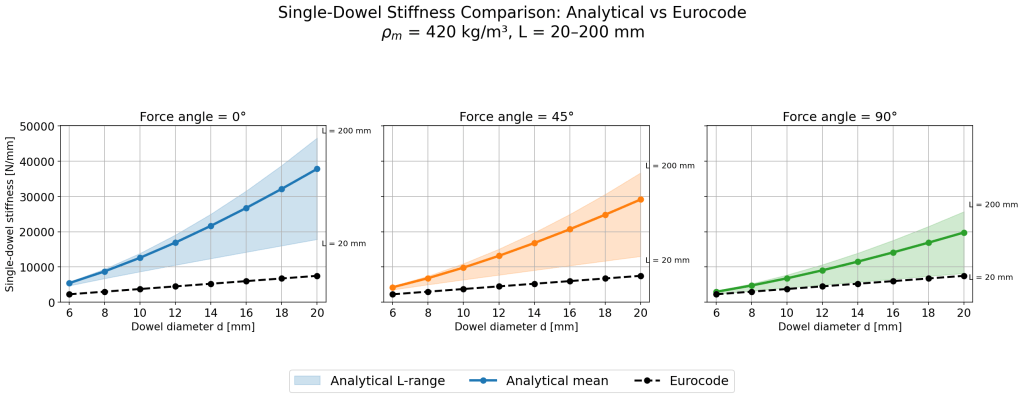
Finally, the analytical predictions were compared with the empirical stiffness formulation prescribed by Eurocode 5. Both approaches exhibited similar trends for relatively short embedment lengths, where the governing deformation mechanisms remain comparable. As the embedment length increased, however, the analytical formulation consistently predicted higher rotational stiffness. This difference is primarily explained by the underlying assumptions of the two methods. Eurocode 5 relates connection stiffness predominantly to timber density and dowel diameter through the slip modulus, creating an effective lower bound, whereas the analytical formulation explicitly incorporates embedment length, loading direction and the distributed interaction between the dowel and the surrounding timber.
From Single Dowels to Complete Connections
The analytical model developed for an individual dowel provides valuable insight into the mechanisms governing rotational stiffness. Practical timber connections, however, rarely consist of a single fastener. Steel–timber knife-plate connections typically contain multiple dowels arranged in carefully designed patterns, allowing bending moments and shear forces to be distributed across the connection. The next step of the research, therefore, investigated how the behaviour of individual dowels combines to determine the rotational stiffness of an entire connection.
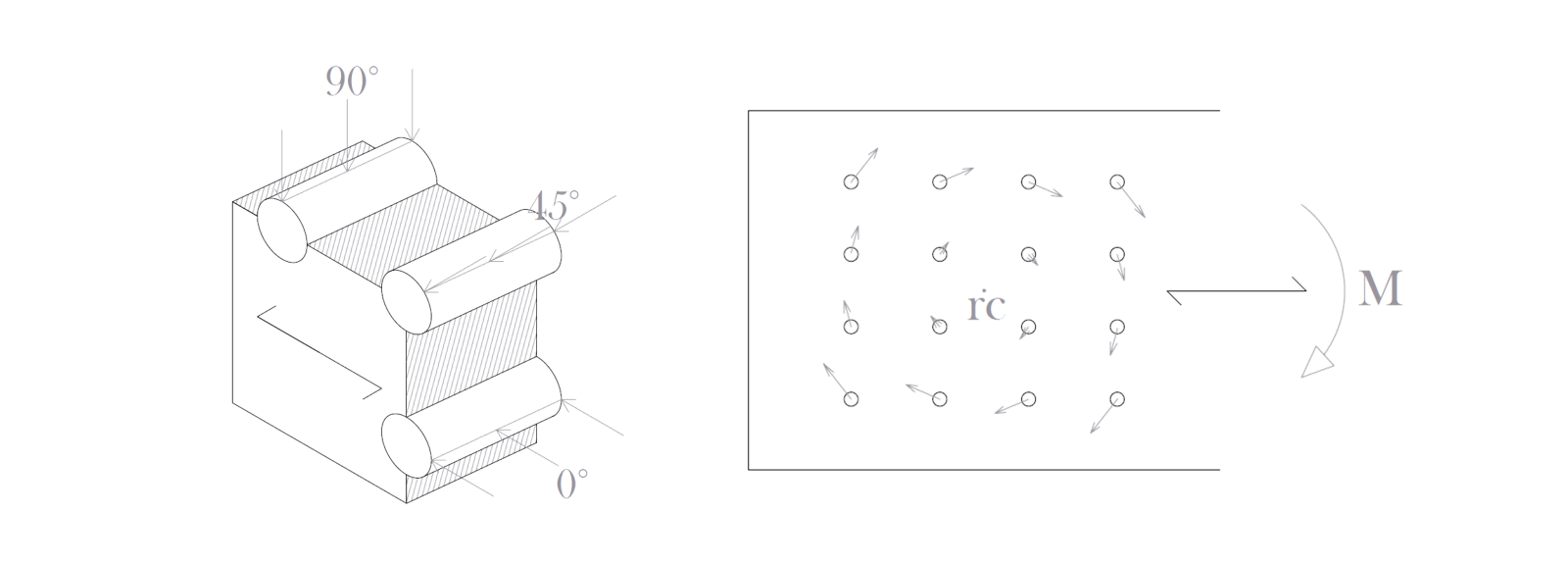
Extending the formulation from a single fastener to a complete connection required consideration not only of the stiffness of each dowel but also of its position within the connection. As a connection rotates, dowels located farther from the centre of rotation experience greater displacements and therefore contribute more effectively to resisting the applied moment. To capture this behaviour, the contribution of each dowel was weighted according to the square of its distance from the centre of rotation. This weighted lever-arm approach allows the rotational stiffness of the complete connection to be obtained directly from the stiffness of the individual fasteners while preserving the underlying mechanics established by the Beam-on-Elastic-Foundation model.
The rotational behaviour of the connection is not governed solely by the dowels. While the fasteners provide most of the resistance against out-of-plane rotation, the steel knife plate itself also undergoes elastic deformation, particularly when loaded in-plane. Consequently, the complete connection can be regarded as two deformable components acting in series: the dowel group and the steel plate. Because both deform under the same applied moment, the overall rotational stiffness is obtained through the reciprocal sum of the individual stiffnesses.
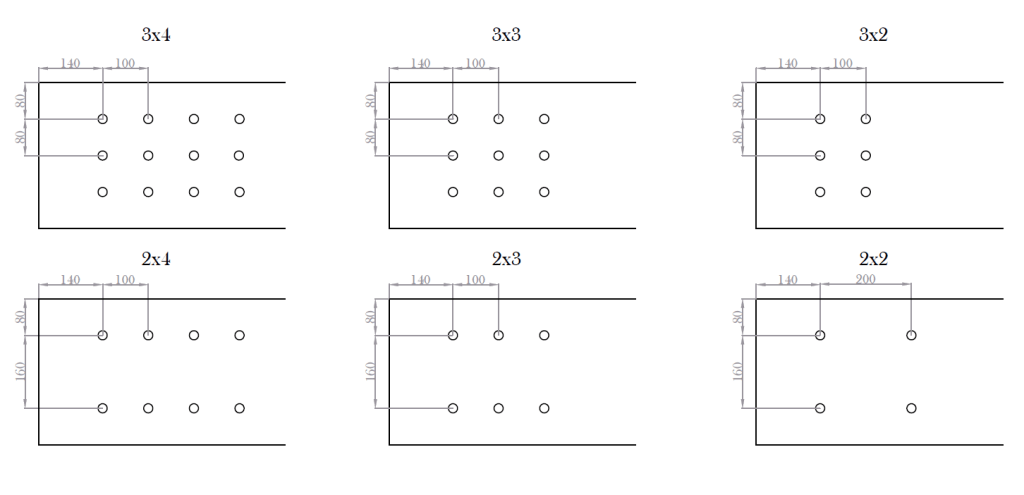
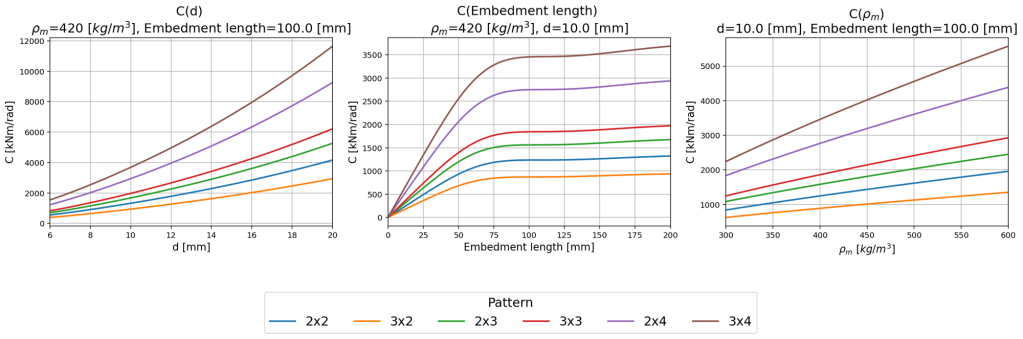
Using this analytical framework, several practical dowel layouts were investigated, ranging from compact two-by-two arrangements to larger multi-row configurations. Although all layouts were based on the same mechanical principles, their rotational stiffness varied considerably due to differences in fastener spacing and geometry. The analyses demonstrated that increasing the distance of the fasteners from the centre of rotation is one of the most effective methods of increasing rotational stiffness. Larger lever arms allow individual dowels to generate greater resisting moments, meaning that connection stiffness can often be increased more efficiently by optimising the fastener layout than by simply increasing the number of dowels.
The influence of geometry was further amplified by the orthotropic behaviour of timber. Because each dowel experiences a different loading direction relative to the grain, the surrounding timber provides a different level of elastic restraint for every fastener within the connection. Dowels loaded predominantly parallel to the grain develop a stiffer embedment foundation than those loaded perpendicular to the grain, causing identical connection layouts to exhibit different rotational stiffnesses depending on the direction of the applied loading. These findings demonstrate that both the arrangement of the dowels and the orientation of the applied forces must be considered when evaluating connection behaviour.
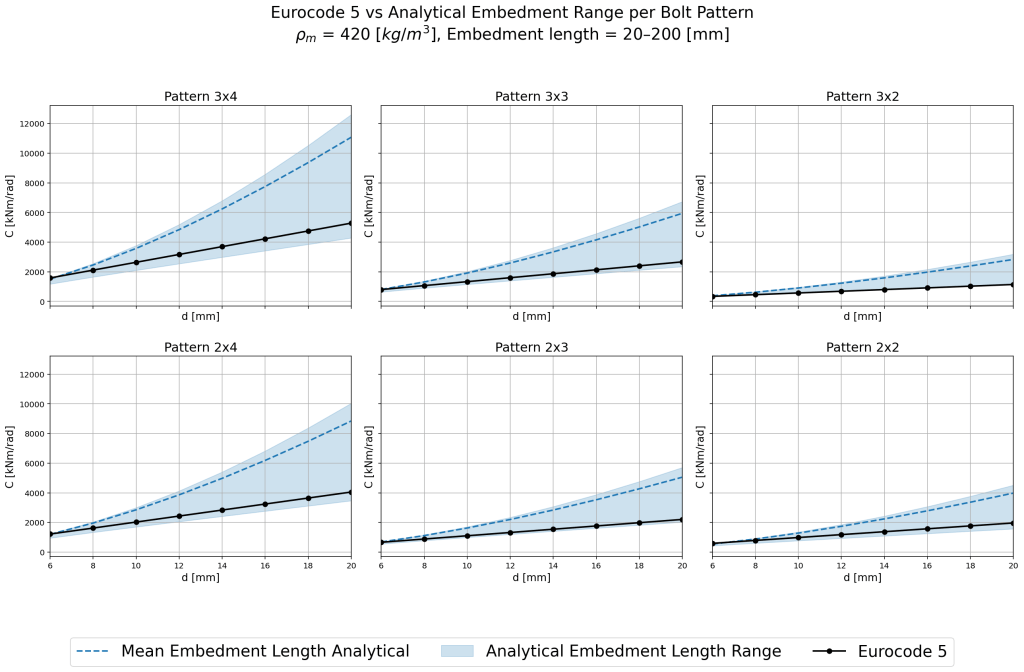
The analytical group formulation was subsequently compared with the empirical design approach prescribed by Eurocode 5. Similar to the observations made for individual dowels, both methods predicted comparable overall trends, while the analytical model consistently produced higher rotational stiffnesses. This difference is primarily explained by the additional mechanisms represented within the analytical formulation. Whereas Eurocode 5 estimates stiffness using the empirical slip modulus, the proposed model explicitly accounts for embedment length, force angle, connection geometry, and the interaction among multiple fasteners.
An important outcome of the group analyses is that connection stiffness should not be regarded as the sum of several identical fasteners. Instead, the stiffness of a connection arises from the interaction among individual dowels, their spatial arrangement, the flexibility of the steel plate, and the directional properties of the surrounding timber. This highlights the importance of considering the connection as an integrated mechanical system rather than as a collection of independent fasteners.
Validation and Stiffness-Informed Design
Although the analytical formulation provides a physically based description of rotational stiffness, its simplifying assumptions require validation. A detailed three-dimensional finite element model of the investigated steel–timber knife-plate connection was therefore developed in MSC Nastran/FEMAP, explicitly representing the steel plate, timber member and dowels while incorporating orthotropic timber behaviour, nonlinear contact and a locally reduced embedment zone surrounding each fastener (Kekeliak, An and Gocál, 2013).
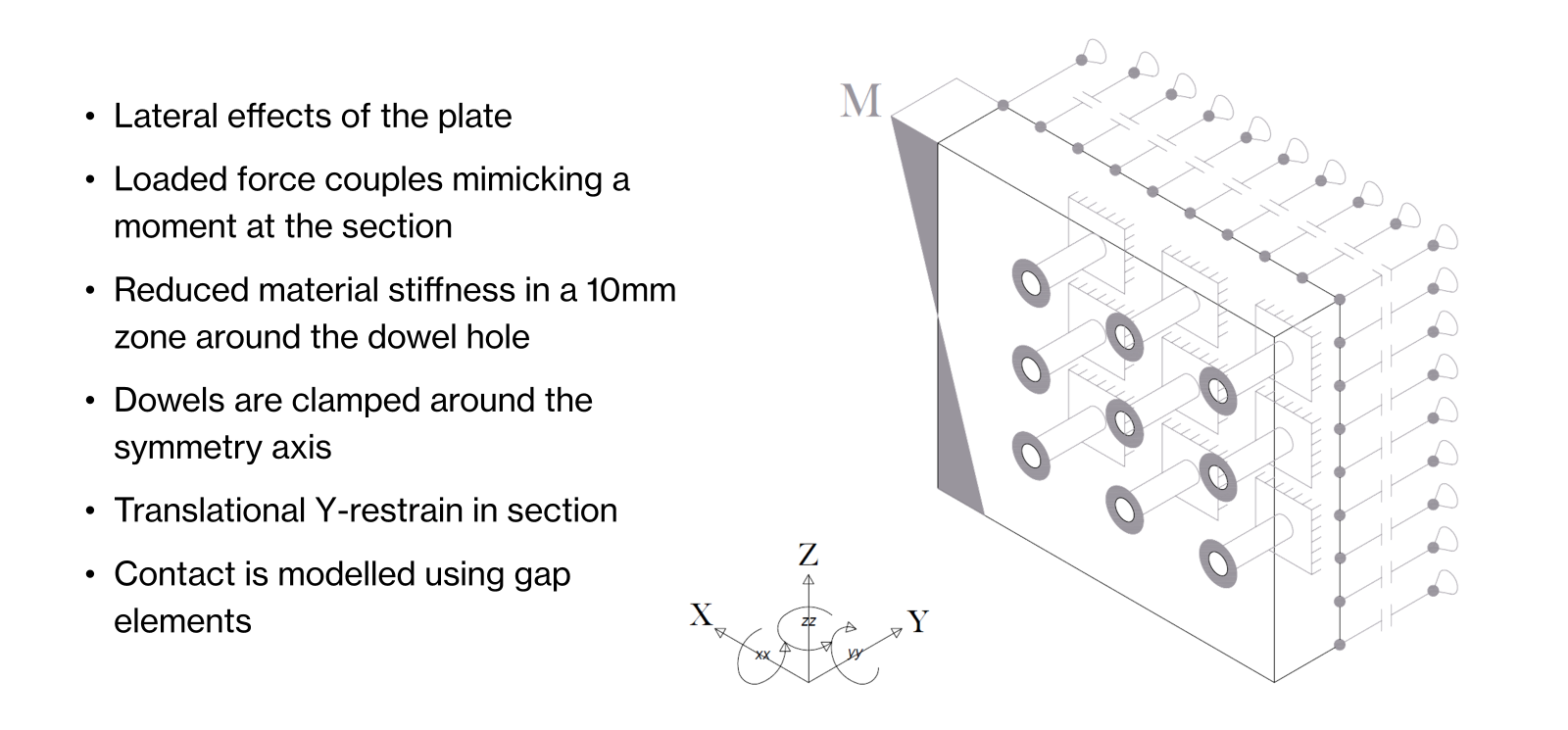
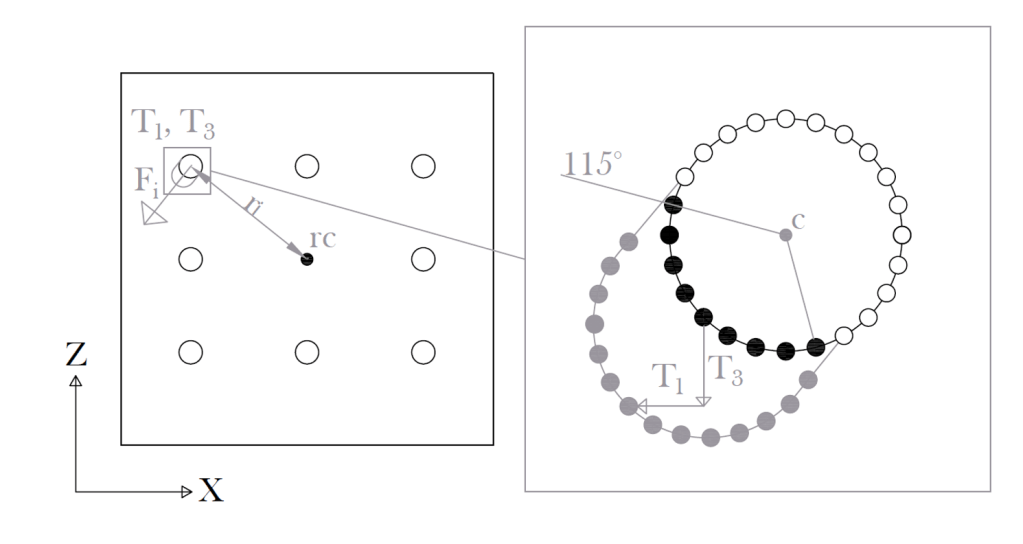
Comparison between the analytical and numerical models confirmed the principal stiffness trends predicted by the Beam-on-Elastic-Foundation formulation. Both approaches demonstrated increasing rotational stiffness with increasing dowel diameter and embedment length while confirming the importance of embedment-dependent behaviour. Although the numerical predictions generally occupied an intermediate position between the analytical formulation and the Eurocode 5 approach, calibration of the analytical model reduced the remaining discrepancy to approximately 5%. This demonstrates that the governing stiffness mechanisms are captured successfully while maintaining a computationally efficient analytical formulation.
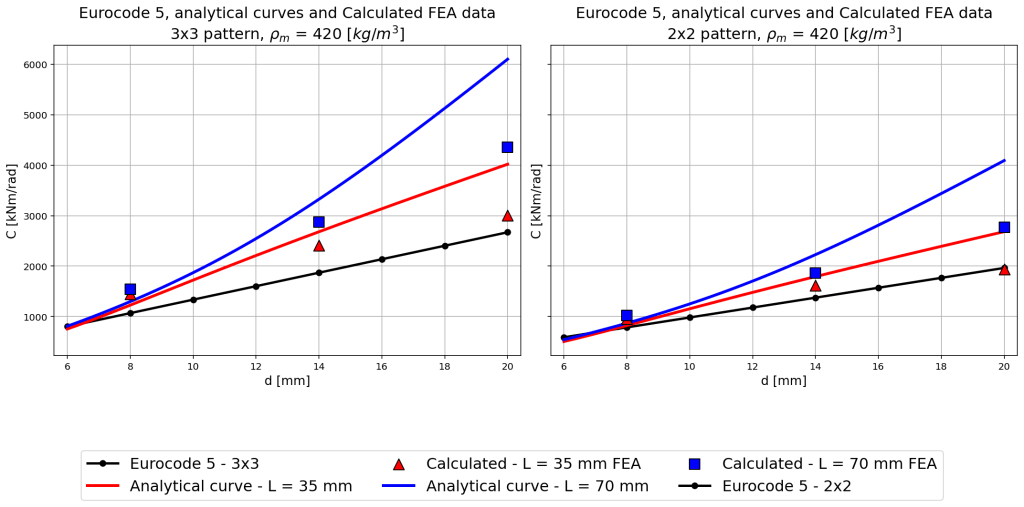
Rather than serving solely as a validation exercise, the numerical analyses confirmed one of the central findings of the research: rotational stiffness cannot be adequately described by local bearing behaviour alone. Instead, it emerges from the interaction among dowel bending, distributed timber support, and the evolving contact conditions and directions along the dowel’s embedded length. These mechanisms, which are only partially represented within current design formulations, explain the observed influence of embedment length and the nonlinear development of rotational stiffness.
Beyond the validation itself, the research demonstrates the value of combining parametric modelling, analytical formulations and numerical simulations within a single computational workflow. Parametric modelling enabled efficient evaluation of large combinations of geometric, material, and stiffness parameters, while automated post-processing significantly reduced the time required to investigate extensive solution spaces. The analytical formulation subsequently translated these parametric studies into a physically interpretable design model, with numerical simulations providing confidence in its engineering applicability.
The principal contribution of this research is therefore not a single analytical equation, but the establishment of a continuous, multi-scale methodology that links local connection mechanics to global structural behaviour. Global analyses identify the rotational stiffness required for stable gridshell behaviour, the analytical model predicts how this stiffness can be achieved through connection geometry and material selection, and numerical validation confirms the reliability of these predictions. Together, these stages transform rotational stiffness from an assumed modelling parameter into an explicit structural design variable.
Although the framework was developed for semi-rigid steel–timber knife-plate connections in unbraced timber gridshells, the methodology is broadly applicable to other dowel-type timber connections where joint stiffness influences structural performance. Future work should focus on experimental validation, nonlinear embedment behaviour, and local stress concentrations, thereby allowing the analytical formulation to be further refined and extended to a wider range of structural applications.
Ultimately, this research demonstrates that the rotational stiffness of semi-rigid timber connections is governed by both material and geometric parameters, and that this stiffness directly influences the structural behaviour and feasible design space of timber gridshells. By establishing a direct relationship between global structural requirements and local connection mechanics, the proposed framework provides a practical basis for stiffness-informed analysis and design while supporting the continued development of computational design methodologies for timber structures
References
Adriaenssens, Sigrid., Block, Philippe., Veenendaal, Diederik. and Williams, Chris. (2014) Shell structures for architecture : form finding and optimization. Routledge/ Taylor & Francis Group.
Dyvik, S.H., Manum, B. and Rønnquist, A. (2021) “Gridshells in recent research—a systematic mapping study,” Applied Sciences (Switzerland), 11(24). Available at: https://doi.org/10.3390/app112411731.
Hetényi, M. (1946) “Beams On Elastic Foundation: Theory With Applications In The Fields Of Civil And Mechanical-Engineering.”
Jockwer, R., Caprio, D. and Jorissen, A. (2022) “Evaluation of parameters influencing the load-deformation behaviour of connections with laterally loaded dowel-type fasteners,” Wood Material Science and Engineering, 17(1), pp. 6–19. Available at: https://doi.org/10.1080/17480272.2021.1955297.
Kekeliak, M., An, J.V. and Gocál, J. (2013) On numerical modelling of dowel type timber connections.
Larsson, S. (2018) Design Implications of Rigid Timber Gridshells: A Method for the Planning and Manufacture of Load-carrying, Rigid, Freeform Structures of Timber. Sweden.
OECD (2019) Global Material Resources Outlook to 2060: Economic Drivers and Environmental Consequences. Paris: OECD Publishing. Available at: https://doi.org/10.1787/9789264307452-en.
UNEP (2023) Building materials and the climate: constructing a new future. United Nations Environment Programme. Available at: https://wedocs.unep.org/20.500.11822/43293 (Accessed: October 14, 2025).
Adriaenssens, Sigrid., Block, Philippe., Veenendaal, Diederik. and Williams, Chris. (2014) Shell structures for architecture : form finding and optimization. Routledge/ Taylor & Francis Group.
Dyvik, S.H., Manum, B. and Rønnquist, A. (2021) “Gridshells in recent research—a systematic mapping study,” Applied Sciences (Switzerland), 11(24). Available at: https://doi.org/10.3390/app112411731.
Hetényi, M. (1946) “Beams On Elastic Foundation: Theory With Applications In The Fields Of Civil And Mechanical-Engineering.”
Jockwer, R., Caprio, D. and Jorissen, A. (2022) “Evaluation of parameters influencing the load-deformation behaviour of connections with laterally loaded dowel-type fasteners,” Wood Material Science and Engineering, 17(1), pp. 6–19. Available at: https://doi.org/10.1080/17480272.2021.1955297.
Kekeliak, M., An, J.V. and Gocál, J. (2013) On numerical modelling of dowel type timber connections.
Larsson, S. (2018) Design Implications of Rigid Timber Gridshells: A Method for the Planning and Manufacture of Load-carrying, Rigid, Freeform Structures of Timber. Sweden.
NEN 1995 (2014) NEN-EN 1995-1-1:2005+A2:2014+NB:2013 Hout – Algemeen, BRISwarenhuis. Available at: https://www.briswarenhuis.nl/docs/norm/nen-en1995-1-1-2005%5B3%5D (Accessed: October 16, 2025).
OECD (2019) Global Material Resources Outlook to 2060: Economic Drivers and Environmental Consequences. Paris: OECD Publishing. Available at: https://doi.org/10.1787/9789264307452-en.
UNEP (2023) Building materials and the climate: constructing a new future. United Nations Environment Programme. Available at: https://wedocs.unep.org/20.500.11822/43293 (Accessed: October 14, 2025).
