

Student : Teun van Warmerdam
Supervisors : Arjan Habraken, Faas Moonen, Thijs Lambrechts
“With the increasing interest in wood as a structural material due to the environmental benefits compared to more conventional construction materials, timber buildings are becoming more common, larger in scale and taller in height.
During the start, a literature study was assessed first to look at the current state of the robustness of timber structures and to see what could be learned from robustness in steel and (precast) concrete structures. This resulted to the question whether timber floor elements made from Engineered Wood products such as cassette floors and CLT (Cross Laminated Timber), can offer robustness by spanning the floor elements over multiple floor areas, creating cantilevers and longer spanning beams in column loss scenarios.”
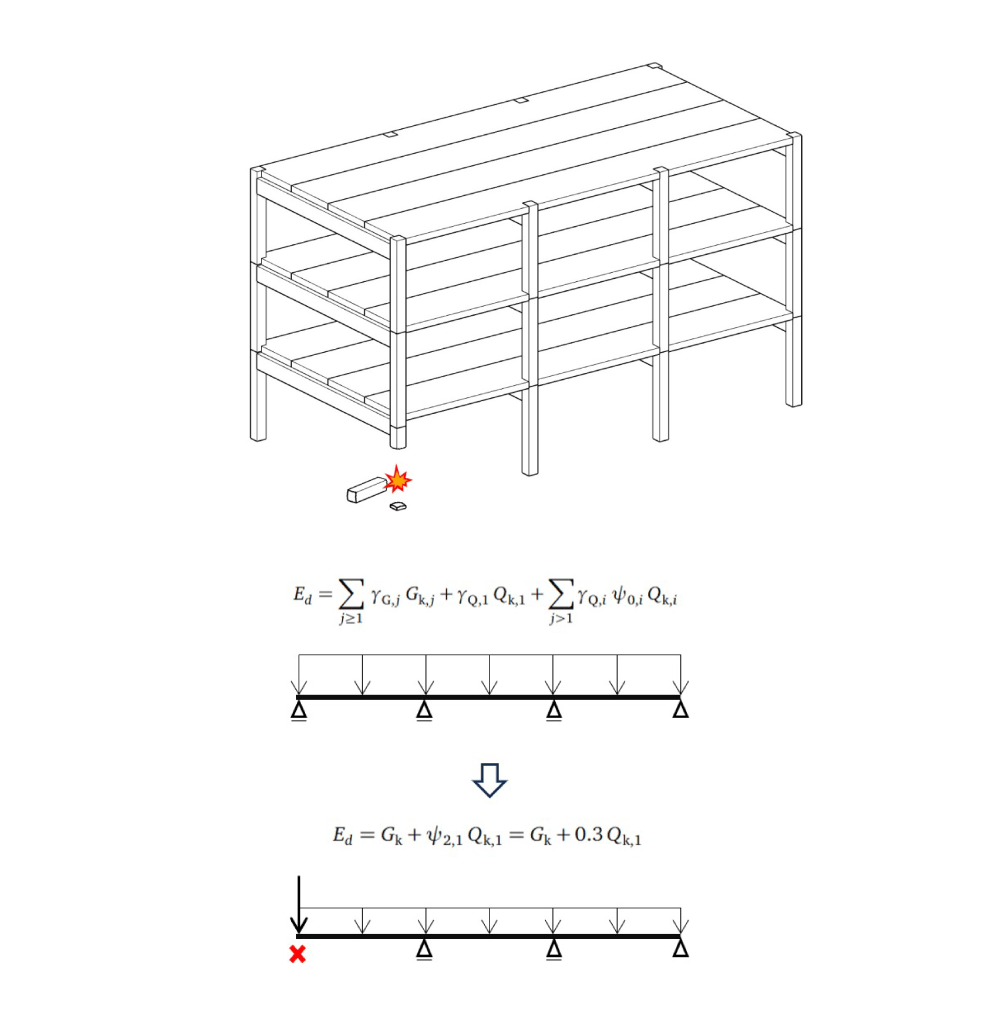
“There are several floors that can be produced at large lengths to span multiple floor fields. In the case of sudden collapse of a supporting element such as a column, the span of adjacent floors will increase or the floor will be cantilevering. Even when a corner column is lost, cantilevered floors are designed for such accidental loads, which does not hold for the tension ties described by the Eurocode.
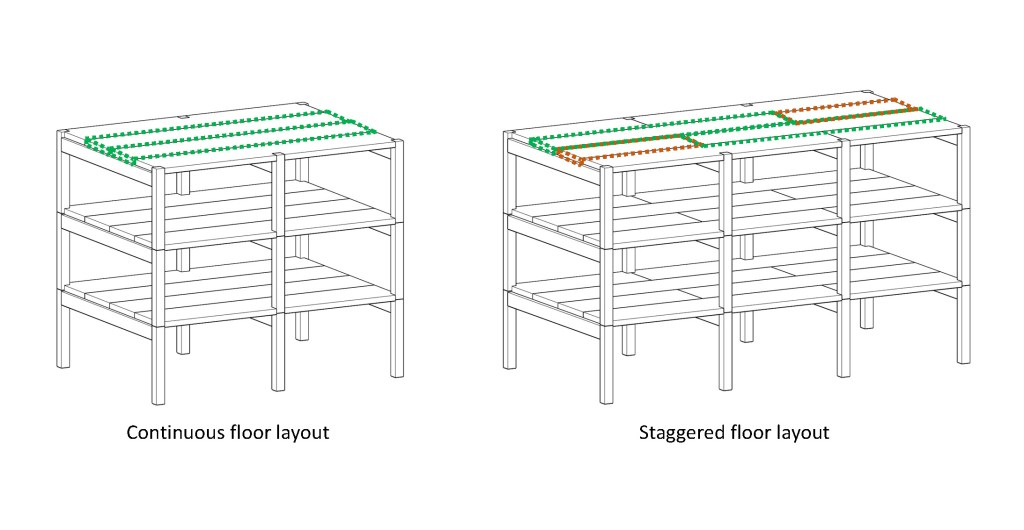
In the assessment both a-continuous and staggered floor element layouts are assessed. While a-continuous floors are always preferred over a staggered layout structurally , staggered might be more practical in some instances with specific building layouts to reduce construction time.
Considering the loss of a column, the façade load is suddenly redistributed and taken by the floor elements. The sudden release of (e.g.) a façade support causes a momentarily dynamic amplification of the load up to a factor of 2.0 due to the lack of plastic energy dissipation in the deformation of the timber floor elements. The key is to find which loads are redistributed via which element and check whether the floor elements and the adjacent members (beams, connections, and columns) can bear the sudden change of load dissipation. The result will answer whether the activation of a secondary load path can prevent further progressive collapse of the floor and at what material costs this comes.
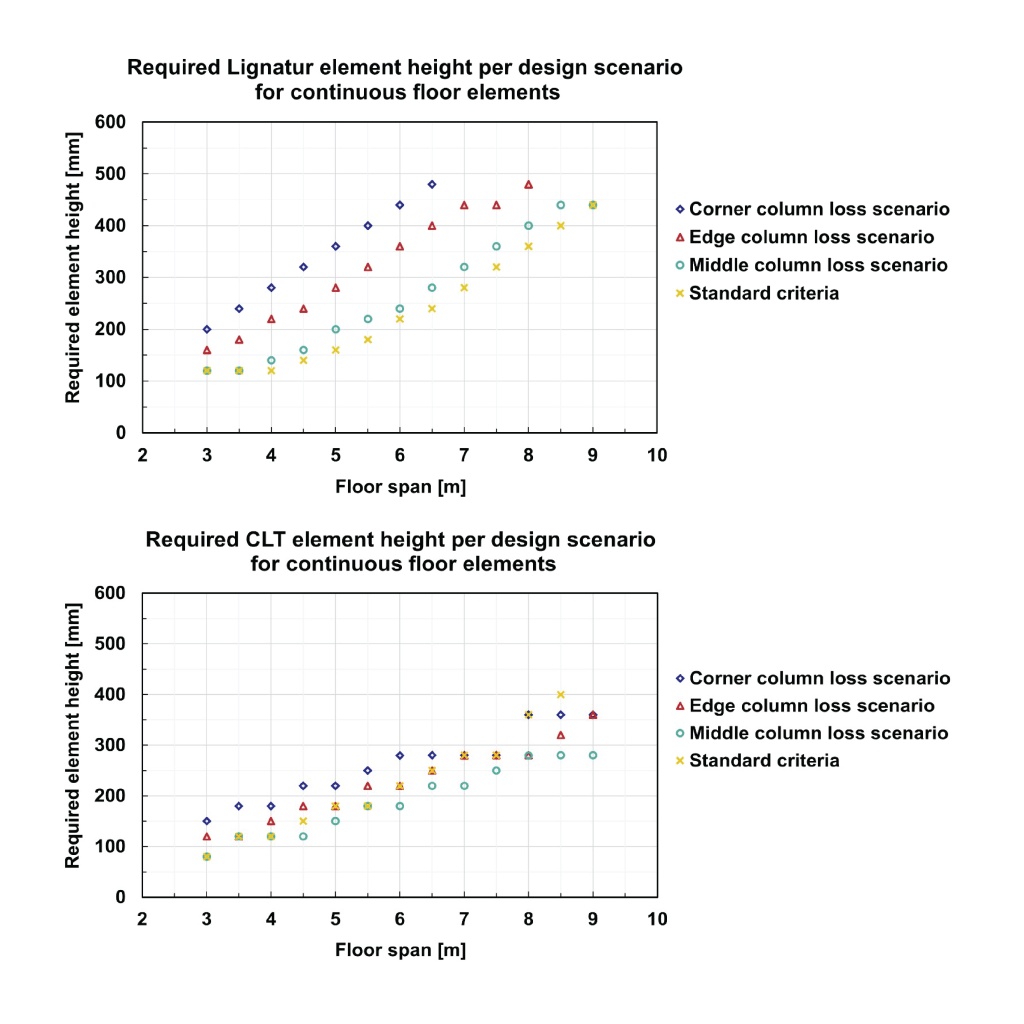
 RESED
RESED 